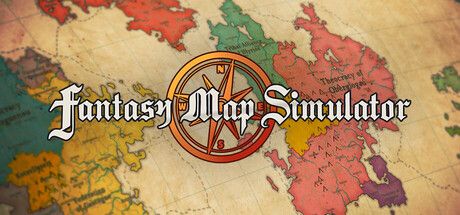
Fantasy Map Simulator
Empires rise and fall on your desktop wallpaper
by The Stranger · 4 Sep, 2024 · Steam (Windows, Early Access)
There is a particular pleasure in looking at a map and imagining the people on it. Fantasy Map Simulator takes that pleasure and automates it. You draw a world, scatter some nations across it, press play, and then centuries of invented history happen without you: borders crawl, alliances rot, religions spread, empires collapse into the exact shape of their own overextension. And if you want, all of it runs as your Windows desktop wallpaper, so the Roman empire of your own design can quietly disintegrate behind your spreadsheet.
This is not a strategy game with a win state. Nobody is going to ask you to objectives. You are an archivist with a lightning bolt.
What the loop feels like
You generate a continent, raise a mountain range down its spine, and seed two rival kingdoms on either side. A century later they have hated each other through four wars. That's the map.
You notice a coastal republic corrupting itself to death, so you pause time, redraw a border, and hand its neighbour a reason to invade. That's the map.
You rewind the timeline just to watch the same dynasty fall again, because you wanted to see whether it was fate or luck. That's the map.
How the systems actually work
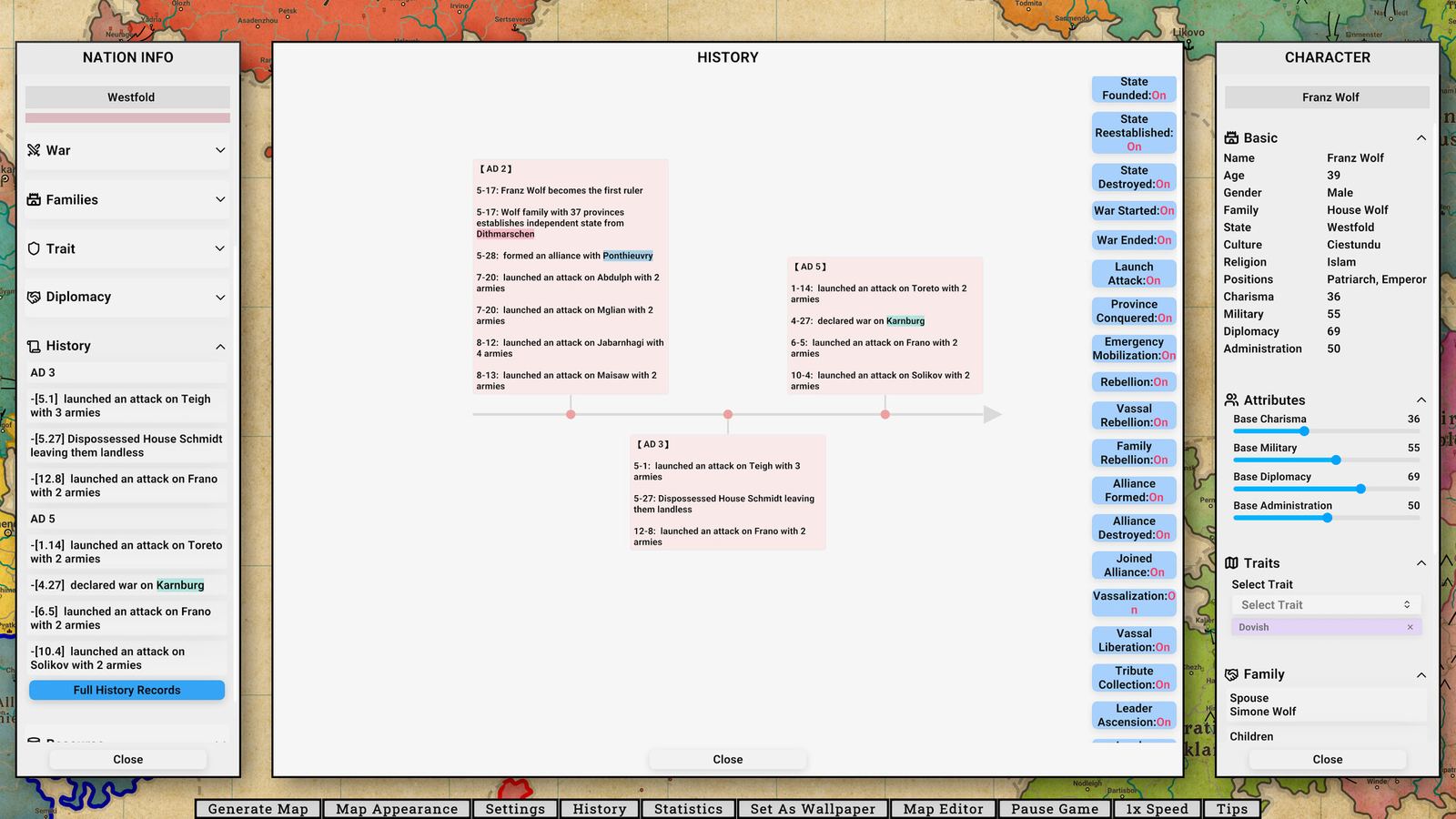
World generation comes first: procedural landmasses, elevation maps, coastlines and biomes, or sculpted by hand if you have a shape in your head. Then nation-building: each state gets a political system, a culture, a religion, a primary economy (fishing, nomadic, commercial) and a corruption level, and those traits drive everything that follows. Civilisations expand, splinter under civil unrest, form religious blocs and wage land and sea wars autonomously. Your interventions are the spice rather than the meal: force or stop wars, trigger rebellions, adjust alliances, hand-paint armies onto the map, and use the timeline tools to rewind and review past eras while tracking population, military power and economic output.
Experienced players treat it as a living writing prompt rather than a game to beat, and their advice is specific. Balance aggressive traits (cavalry traditions, say) with systemic restraints like high corruption, or a single superpower steamrolls the map in the first fifty years. If you want long-standing rivalries rather than a quick conquest, paint mountain ranges and narrow sea straits during terrain editing, because geography is the most reliable storyteller in the box.
Where it grates
The interface is rough around the edges, and fine-tuning a large simulation can get tedious. Big worlds occasionally stutter where older, more refined competitors stay smooth. And depth is the honest ceiling: once you have watched the procedural loops play out a few times, some players run out of surprises. The Steam Workshop scene is real but thinner than what direct rivals enjoy, and user feedback keeps circling the same wish, for culture and trade to push back on the states that carry them, the way a review on the community hub puts it.
Compared with the wacky god-toy sandbox end of the genre it is a sober, map-painting machine, closer in spirit to a lightweight grand strategy observer than a creature zoo. Players who like watching systems rather than poking them, the to the core and kittens game crowd, will feel at home.
The verdict
A promising, atmospheric world-watcher with great creative bones, best run on a second screen and judged by the stories it hands you. It is Early Access and behaves like it; it is also already the best wallpaper in the genre.
If you like Fantasy Map Simulator
mechanic-matched
+1x2
Two buttons, one quadrillion: add a temporary +1 or double everything forever.
AdVenture Communist
Worth your timeThe idle game with missions instead of mindless clicking: potatoes in, Supreme Einsteins out.

AI Tycoon
A satirical idle clicker about replacing every job on Earth with AI, one agent.exe click at a time.

Animal Farmland
Click crops into existence, let bouncy animal villagers do the work, and watch a farm sprawl.