Kapital13
Four economic sectors, 117 items, a stock market and your own two hands in the early game.
by Ethernal Studio · 26 May, 2022 · PC (Windows)
Kapital13 opens by making you an employee of your own company. Ethernal Studio's 2022 casual strategy game starts before the workforce exists: you are the mining crew, the foraging party and the delivery service, and every hour of your own labour converts directly into capital. Only later does the title's actual subject arrive, which is what happens to a business when its owner stops being the cheapest worker on the payroll.
What the loop feels like
You gather, process and haul everything yourself, and the money accumulates in visibly honest increments. The four economic sectors start with raw acquisition, mining for ores and gems, forestry, hunting, foraging, farming and livestock, and every raw unit has to physically move before it can become anything. That's Kapital13.
Then hiring begins and the loop inverts. Employees take over schedules and wages, facilities like internal smelting chains reduce your direct intervention, and surplus cash flows into land plots and licences that unlock richer resource nodes. Meanwhile the in-game market takes your idle money and makes it argue with itself. That's Kapital13.
The systems doing the work
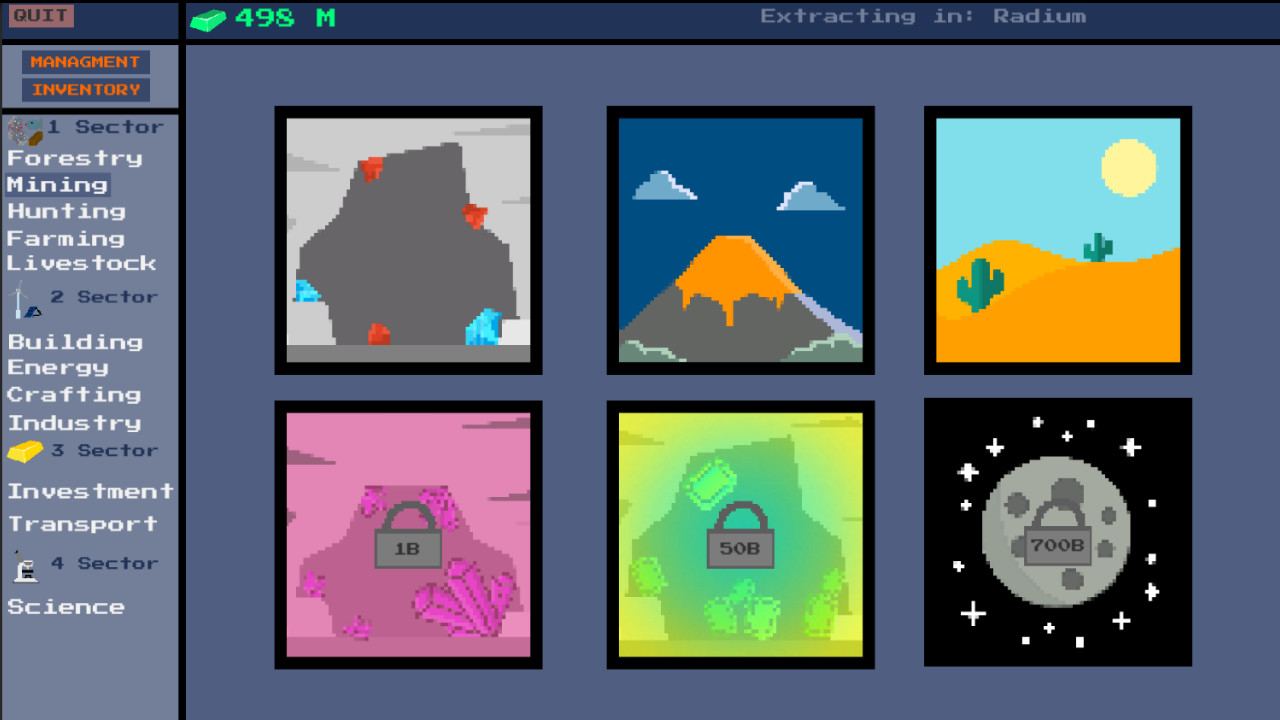
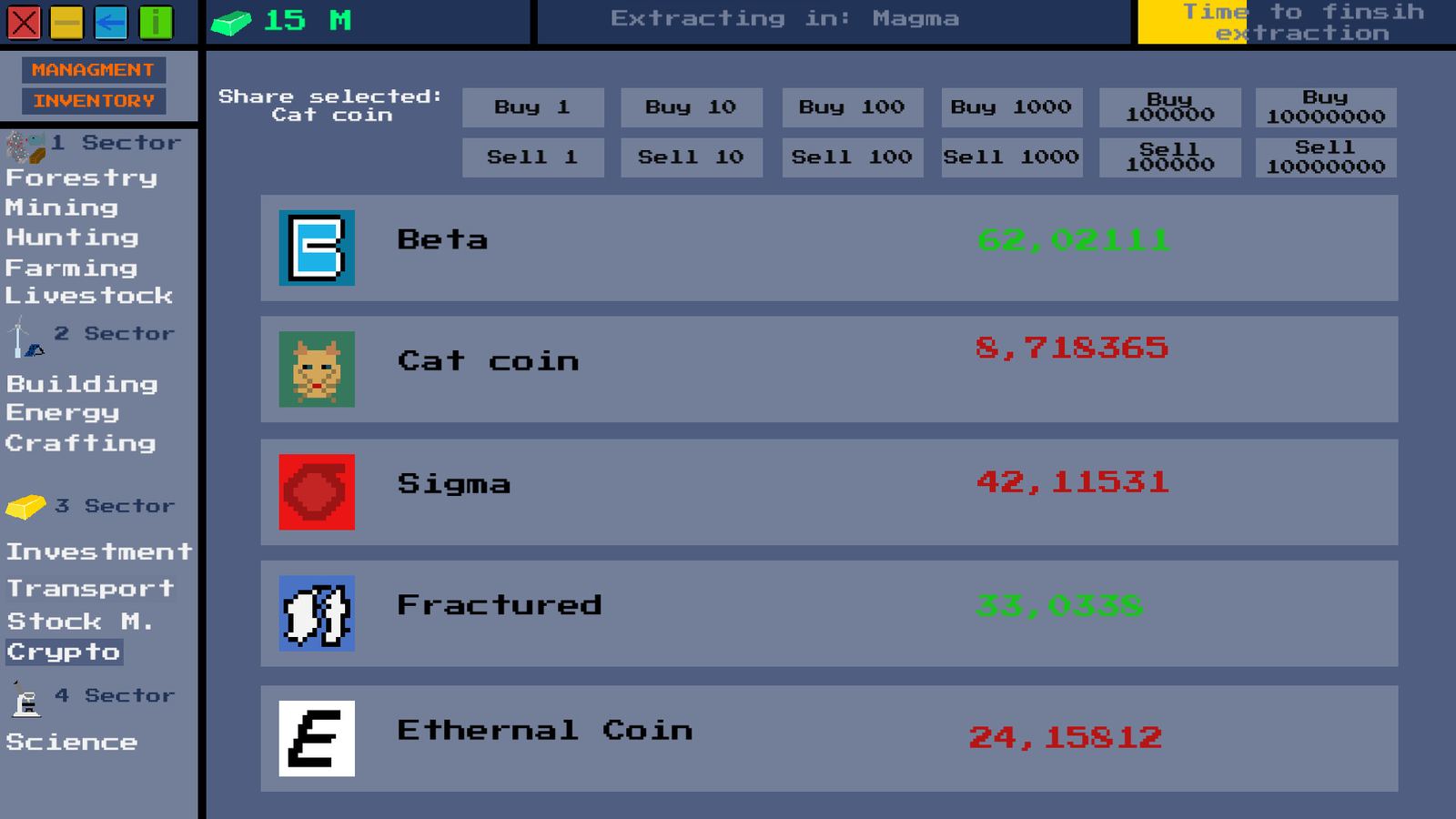
The Four Economic Sectors tier production from raw resource acquisition through processing, crafting and internal smelting, and the primary sector dictates every ceiling above it: unstable mining or foraging starves the entire downstream chain. Inventory and Logistics is the hard constraint, with 117 distinct items tracked across warehouses and transport routes, where one bottleneck in moving raw materials stalls every secondary sector behind it. Capital and Markets completes the triangle: surplus cash can be invested in fluctuating stock prices, with the in-game notepad tool intended for exactly that bookkeeping.
Territorial and Resource Expansion is the progression spine, buying land plots and licences to reach rare ores, dense forests and fertile farmland, while Automation and Scaling shifts the game from personal grinding toward a workforce that runs without you. The community's standing advice matches the structure: secure raw supply lines before rushing upscale manufacturing, watch transport efficiency before admiring your factory line, and reinvest aggressively rather than sitting on cash.
Where it stumbles
The presentation is plain and the UI asks patience, with interface friction making inventory and task assignment tedious rather than satisfying. The loops are repetitive, the advertised depth of a hundred-plus items and multiple sectors does not fully interlock at the level classic tycoon games manage, and the community footprint is nearly silent. Received sparsely and mixed-to-low on Steam, it wears its casual label awkwardly given how punishing a logistics error can be, and it is easy to put down and forget.
Playing it today
On Steam for Windows and Linux. It shares the manage-a-labour-pool instinct of Idle Miner Tycoon but grounds it in inventory weight, and its empire-of-small-holdings feel sits closer to Progress Quest's labour-as-progress than to any boardroom sim.
The verdict
A dense little economy sim hiding under a casual sticker. Not polished, but the four-sector dependency model is real, the transport bottleneck is an honest teacher, and watching employees take over the work you used to do is the quiet satisfaction the genre promises.
If you like Kapital13
mechanic-matched
Clicky Coven
A witch assembly line where the bottleneck is real and the cauldrons can outpace the harvest.
Lazy Sweet Tycoon
Tap sugar out of a voxel island, automate the candy factory, and fight other CEOs for the No.1 leaderboard spot.
AdVenture Communist
Worth your timeThe idle game with missions instead of mindless clicking: potatoes in, Supreme Einsteins out.

Assembly Line 2 Mobile Version
The phone-era Assembly Line 2 on PC: starters, rollers and a billion-dollar robot.