
Kitten Food Alley
Run food stalls staffed by cats, where petting your employees is the production line.
by NOT IS NOT STUDIO · 10 Mar, 2025 · Windows
In most management games, production is a timer. In Kitten Food Alley, production is the act of petting a cat. NOT IS NOT STUDIO's March 2025 casual sim makes feline affection the literal production input: your cat employees generate food when petted, food sells in a street of specialized shops, and automation arrives in the form of auto-brushing tools so your index finger can eventually retire. The store page promises the stress relief of cyber cat petting, and the whole game is built to honor that promise in about two hours.
What the loop feels like
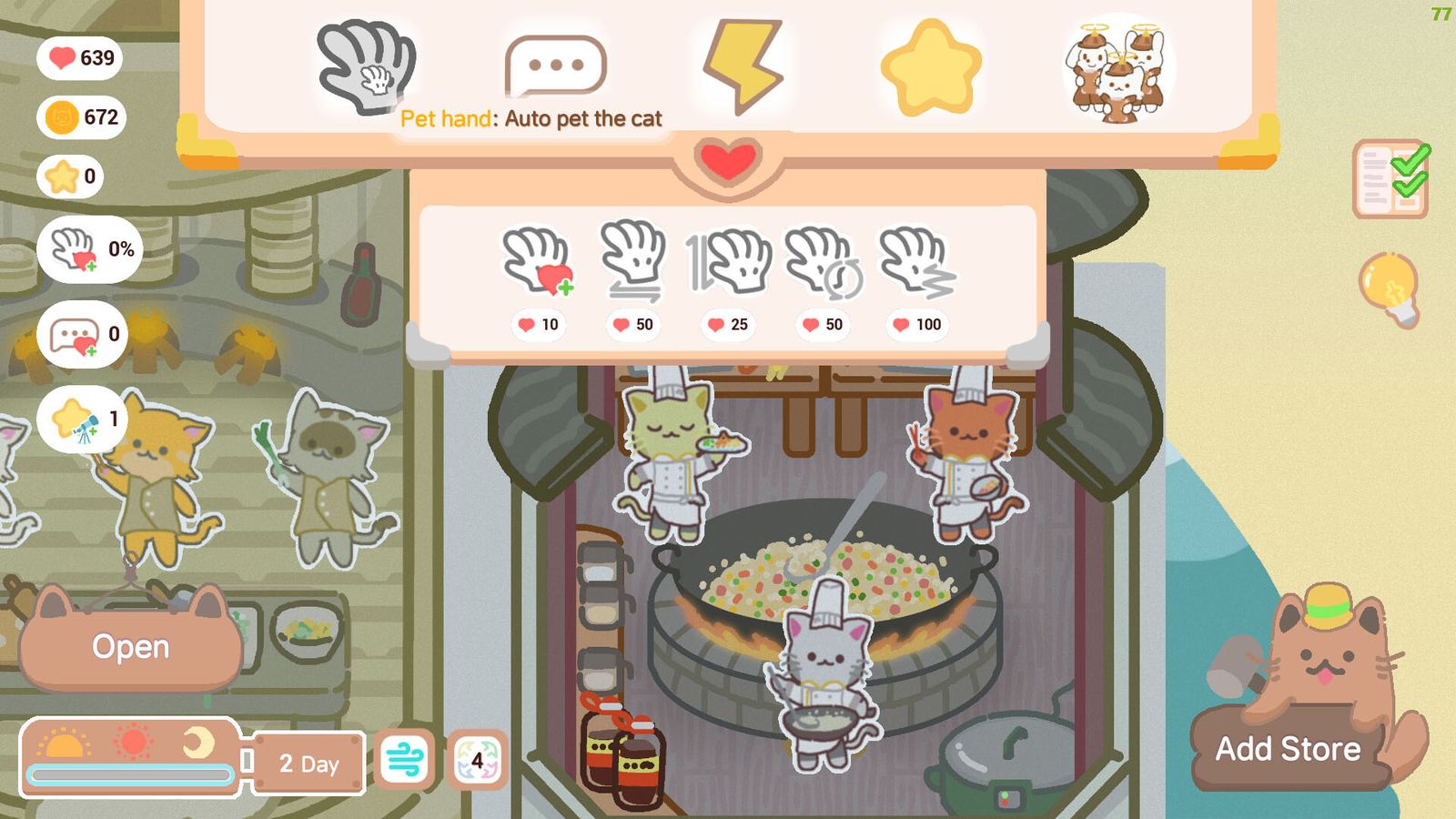
You pat a cat. The cat, an employee, produces food. The food sells, and money and love flow back as two separate currencies, each unlocking its own half of the toolkit. The petting is genuinely the mechanic, not a garnish, and the first few minutes are exactly as absurd and pleasant as that sounds. That's Kitten Food Alley.
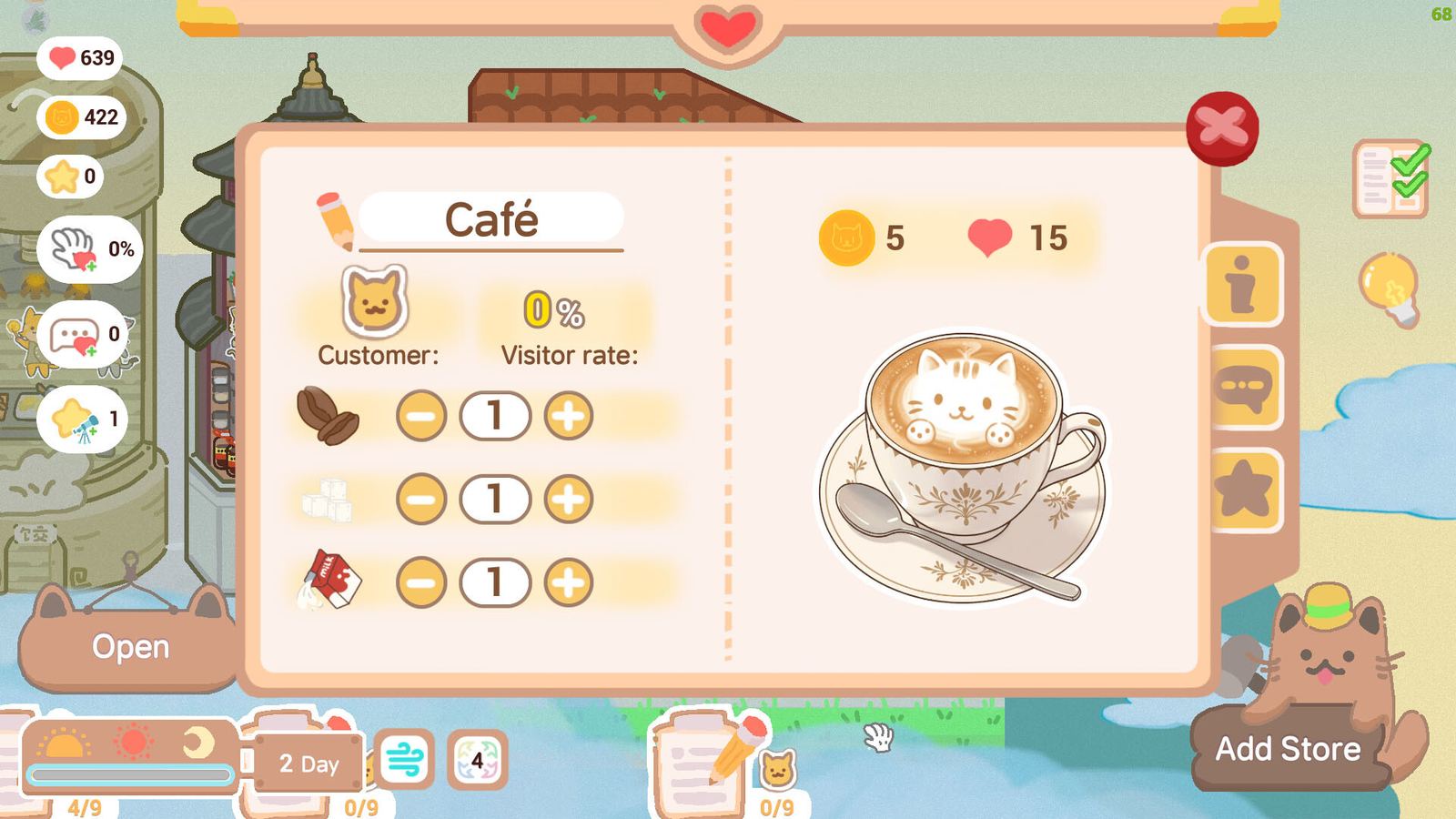
Then the street grows. You open shops, ramen, popsicles, dumplings, jianbing guozi, and read customer feedback to tune each recipe toward satisfaction, while love accumulates toward the automation tools that keep the cats producing without you. That's Kitten Food Alley.
The systems doing the work
The Petting-to-Production Loop replaces resource gathering with affection: petting generates the output that keeps shops running. Shop and Recipe Management spans up to 12 store types, each tuned against customer feedback to chase satisfaction rates. The Dual Resource Economy splits progress between love, gained through interaction, and money, gained through sales. Automation Tools, auto-brushes and similar props, convert the manual petting into passive production, which is the game's own version of the genre's idle pivot.
Progression is level-based: five levels across areas like the old Cat Village and Friendship Town, each with plain goals, open particular stores, hit satisfaction or revenue targets, and clearing a level unlocks the next tier of props, equipment and shop concepts. The community's standing advice is the genre's usual wisdom wearing a whisker: prioritise auto-petting props early, and watch the feedback area, because recipe tweaks that match customer desires push satisfaction up faster than any amount of extra petting.
Where it stumbles
It is short. The five levels wrap comfortably in an evening or two, and rushing makes that feel abrupt. The meowing that plays while petting is adorable for minutes and then simply plays, with no dedicated volume control for it, which turns the game's core sound into its most common complaint. And depth is deliberately light: this is a bite-sized palate cleanser rather than an expansive sim, and it does not pretend otherwise.
Playing it today
On Steam for Windows at a modest price, warmly received by its small audience, best played slowly as the community advises: a micro-retreat, not an optimizer. For similar short-form cozy management, the catalog's closest spirit is Isopod Keeping Simulator, another tiny husbandry loop, while Rusty's Retirement covers the passive desktop end of the spectrum.
The verdict
A small, complete, genuinely charming loop with a definite ending, which in this genre is nearly a novelty. Buy it for the cat petting, stay for the two hours it asks for, and turn the meowing down before it turns on you.
If you like Kitten Food Alley
mechanic-matched
Chonkers
A cat-flipping idle economy in a cozy trench coat: adopt, chonkify, sell by the kilo.

Dwarf Eats Mountain
GreatA strategic incremental about feeding dwarves to a mountain, and the logistics of getting the gold back out.

Endless Battle: Return of Hero +1
The hero fights alone. You run the spellbook, the buildings and the economy.
Fungiculture
A fairy, a fruiting chamber and 154 fungi: a cozy mushroom-growing idler for the second monitor.