Lazy Galaxy 2
Base-building incremental with light RTS battles, spatial grid synergies and a candy-powered prestige tree, starring the laziest evil aliens in the galaxy.
by Coldwild Games · 15 Mar, 2022 · Steam (Windows / macOS / Linux)
Lazy Galaxy 2 hands the universe to a race of evil aliens who cannot be bothered to conquer it efficiently. Coldwild Games released it on Steam in March 2022 as a sequel that stands alone, deepening the base building, reworking the battle system, and adding hand-crafted campaign maps to the first game's formula. The hook is a hybrid: an incremental economy, a spatial building grid, and streamlined fleet combat you can either babysit or ignore.
What the loop feels like
You click asteroids for metal, then build a mine, and the mine produces even when you stop clicking. That's Lazy Galaxy 2.
You nudge that mine one tile closer to its neighbor and its output jumps, because adjacency is a multiplier. That's Lazy Galaxy 2.
Your fleet flattens a planet without your input, converts the experience into candy, and the candy buys permanent power. That's Lazy Galaxy 2: a placement puzzle wearing an idle game as a coat.
Where you build matters more than what you build
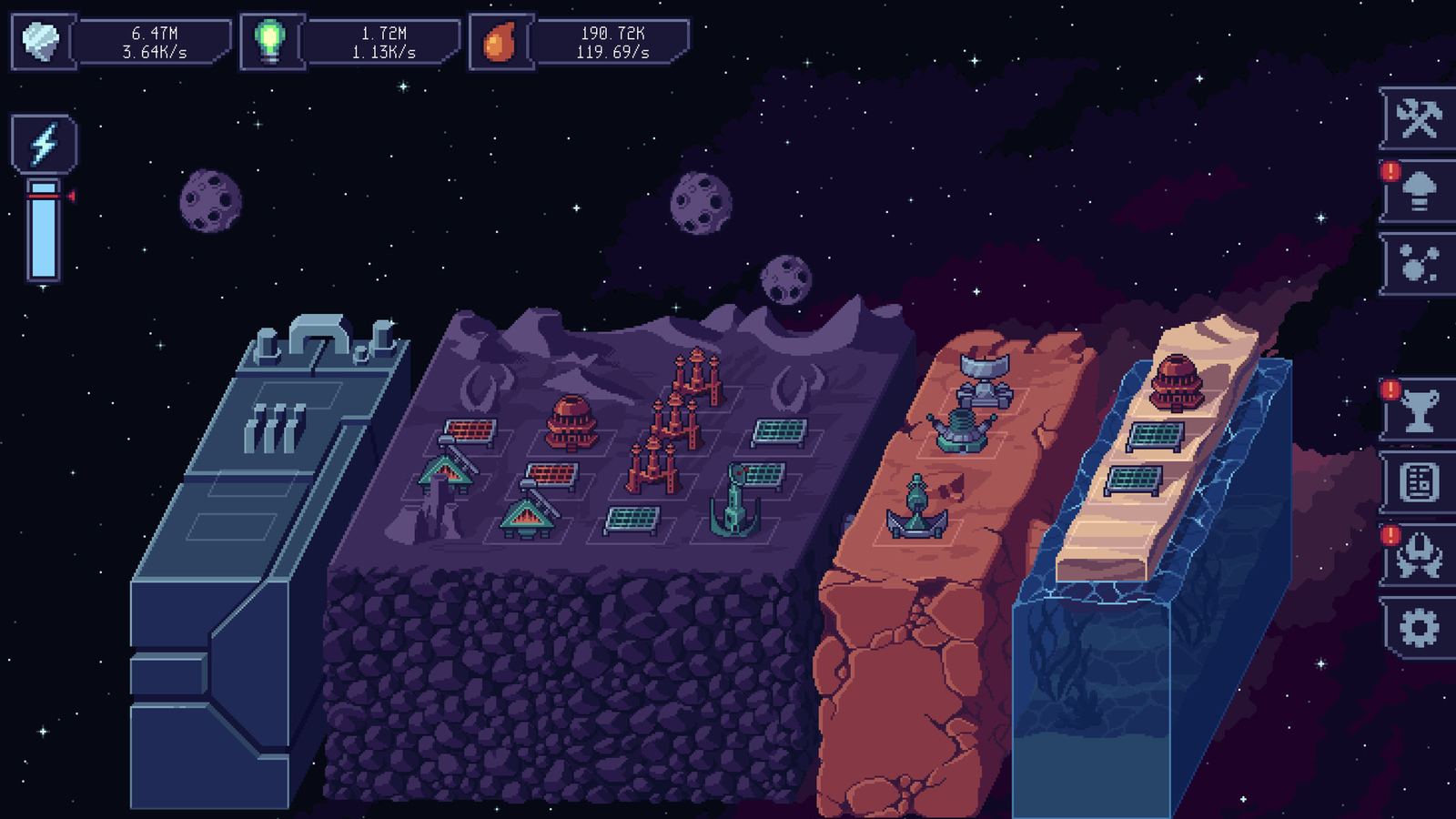
The grid is the game's signature system, and it punishes lazy placement. Metal mines gain production when clustered adjacently, while solar panels scale best spaced one tile apart, so the optimal layout is a genuine spatial puzzle rather than a spam exercise. Energy is a strict, non-accumulating pool that powers construction, capping your economic footprint and forcing trade-offs instead of infinite structure spam. Research labs unlock new structures, fuel pumps and scanners for rare asteroids, and buildings upgraded in milestone steps, multiples of five, pay out extra academy and production bonuses.
The prestige layer runs on Candy, the most precious alien resource, earned by converting combat experience and cleared planets. Ascending resets your conquest and layout in exchange for Candy, which feeds a permanent skill tree, and here is the twist that defines optimal play: unspent Candy sitting in your inventory grants a passive production bonus of one percent per Candy. Every purchase is therefore a live argument with itself, spend for skills or hoard for income. The community's rule of thumb is to push past a boss before ascending, since clear rewards jump hard at those thresholds, and to prioritize offline progress multipliers and cost discounts in the tree early.
Where it stumbles
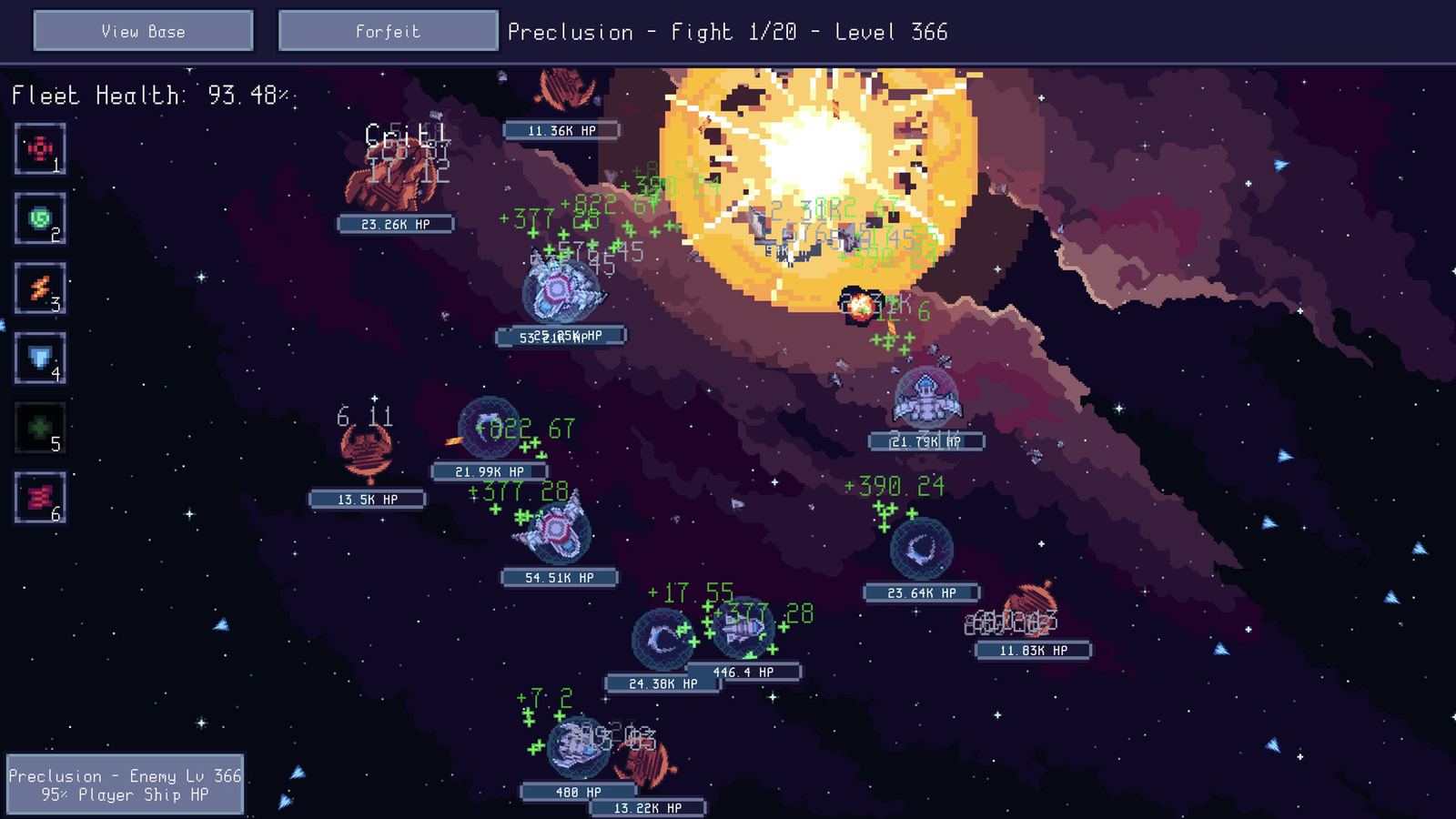
The most common complaint is the name itself: this is not actually an idle game. Idling carries the first ascensions fine, but the mid-to-late game demands active watching, tweaking and micromanagement to make real headway. The endgame loops, Cataclysms and repeated ascensions, grind toward repetitive resource farming, and some players find the hybrid never reaches full depth in either half, with base building a bit light and combat a bit thin. Community reception lands around a tepid-recommend register, with the loop wearing thin after fifteen to twenty hours for players expecting true background idling.
Playing it today
Live on Steam for Windows, macOS and Linux at a modest premium price, from developer-publisher Coldwild Games, with Workshop support for custom maps and zero microtransactions or ads.
The verdict
A bite-sized weekend incremental with real ideas, the adjacency grid and the hoardable prestige currency, wrapped in a charming anti-microtransaction package. Sit with it as an active-lite campaign rather than an idler and it delivers. For a similar scale of cozy optimization, (the) Gnorp Apologue is the obvious companion piece.
Community
If you like Lazy Galaxy 2
mechanic-matched
AdVenture Communist
Worth your timeThe idle game with missions instead of mindless clicking: potatoes in, Supreme Einsteins out.
Clicker Heroes
Worth your timeThe idle RPG that taught a whole genre to count.
Clicky Coven
A witch assembly line where the bottleneck is real and the cauldrons can outpace the harvest.
Dwarf Eats Mountain
GreatA strategic incremental about feeding dwarves to a mountain, and the logistics of getting the gold back out.