
Blue Ocean Tycoon
Run a global shipping line across 76 ports: match your fleet to the cargo and let the containers roll.
by Manodio Co., Ltd. · 13 Oct 2016 · iOS
Maritime logistics is the tycoon genre's least fashionable corner, which is exactly why Blue Ocean Tycoon has kept its small devoted audience since 2016. Manodio's free sim hands you a modest fleet and a map of 76 global ports, from Shanghai to Rotterdam to Los Angeles, and asks you to build a shipping network that matches the right vessels to the right cargo.
What the loop feels like
You buy a ship, assign a route, watch the transit timers, and reinvest the profits into port infrastructure that can handle bigger vessels. The horizon is wide and the spreadsheets are calm. That's Blue Ocean Tycoon.
Then a regional ferry line graduates into intercontinental container traffic, the port upgrades compound, and your little network starts resembling actual global trade. That's Blue Ocean Tycoon.
The systems doing the work
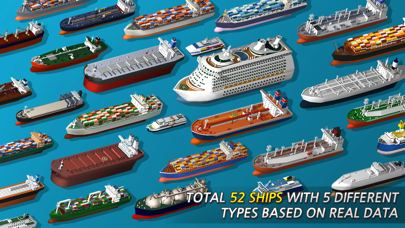
The fleet spans 52 distinct vessels across five ship lines: ferries, container lines, grain carriers, LNG tankers and specialized heavy freighters. Each port has its own trading volumes and economic weights, so matching ship type to a port's export demand is the core decision, and the game is genuinely a logistics puzzle before it is a clicker.
Port upgrades raise overall trading capacity, and the instant advertising system temporarily spikes local trade activity and revenue when a route needs a push. Progression runs both horizontally, unlocking higher-tier ports with steeper capital requirements, and vertically, scaling fleet capacity to handle massive intercontinental transit times. Veteran advice anchors early capital on dominant routes between high-volume hubs like Shanghai, Singapore and Rotterdam. The named systems, global port network, diverse fleet management with cargo matching, port upgrades and advertising, horizontal expansion, and the reinvestment loop between routes and infrastructure, make this more manager than idle: progress comes from route planning rather than waiting.
Where it stumbles
Age shows everywhere. The UI, graphics and animations are mid-2010s mobile stock and have not been meaningfully overhauled. The loop reduces to repetitive route optimization, minor upgrades and waiting out timers, and management elements like hiring assistants or running advertising boil down to flat percentage buffs rather than real decisions. Against deep logistics sims it is vastly simpler, and against modern mobile tycoons it plays like a spreadsheet manager with graphics. Nostalgia for the shipping theme is doing real work here.
Playing it today
It is free on the App Store from Manodio Co., Ltd., still rated highly by its niche. If trade networks appeal, Idle Trading Empire compresses the merchant loop into idle form, and Ticarium: Business Tycoon adds a live multiplayer economy on top.
The verdict
A dated but genuine shipping manager: real ports, real fleet decisions, real route math, wrapped in tired presentation. For maritime-management fans it remains a small, sturdy pleasure; for everyone else it is a museum of 2016 mobile tycoon design, and a decent one.
If you like Blue Ocean Tycoon
mechanic-matched
Coffee Inc: Business Tycoon
A turn-based corporate sim wearing a coffee logo: real balance sheets, IPOs and hostile takeovers.

Clicky Coven
A witch assembly line where the bottleneck is real and the cauldrons can outpace the harvest.

Kapital13
Four economic sectors, 117 items, a stock market and your own two hands in the early game.

Kingdom of Assetia: The Clicker Game
Rebuild the flood-hit village of Anywhere one click at a time, then let idle production finish the job.