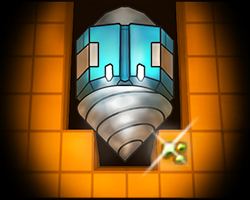
Brave World
Strategically increment and conquer the world: GabeOliveira's Flash war trilogy begins.
by GabeOliveira · 2015 · Web (Flash, defunct)
Brave World is the 2015 first chapter of GabeOliveira's Flash war trilogy on Kongregate: strategically increment and conquer the world, the listing said, and the two sequels that followed kept the war going through 2019. It is a war game for people who want the war to run itself.
What the loop felt like
You controlled cities, the cities trained units, and the fronts pushed outward one conquest at a time while invasions pushed back. The map was the scoreboard, and every territory taken made the next one cheaper. That's Brave World.
Then the auto-updates took over the barracks, the bulk commands took over the micro-management, and the war became something you supervised rather than fought. Also that's Brave World.
The systems doing the work
The core was city and territory management: multiple cities on a map, each generating units and resources, with the objective of resisting incoming invasions while systematically conquering neighbouring territory. Progression was entirely spatial and numerical, since controlling more of the map increased output and chokehold, and winning required eventually bringing all cities under your control.
The idle layer is what made it distinctive: auto-updates for structures like barracks kept cities growing and training while you were away from the keyboard, and bulk actions streamlined the scale, an "Attack with all cities" button, a "Stop all actions" master toggle, and a scouting and spying system to gauge enemy strength before committing forces. The micro-economy balanced spying costs against unit generation and automated upgrades, with overspending on intelligence leaving your armies underfunded. It was a strategy game that aspired to be an idle game, and mostly got there. An honesty note on research: our AI passes leaned on the general architecture of the genre, so this entry keeps to the documented mechanics and the trilogy's own store copy.
Where it stumbles
The original verdicts are largely lost to the platform's decline, which is its own kind of criticism: a trilogy that ran on Flash was always living on borrowed time. The genre template itself dated quickly, since territory tickers with bulk buttons were the Kongregate era's answer to grand strategy, and the loops that felt fresh in 2015 feel thin now. What survives suggests rough edges typical of a solo developer's ambitious scope rather than fundamental flaws, but honesty requires admitting we are reconstructing reception from fragments.
Playing it today
The Kongregate page still exists but serves only a placeholder, verified in this rewrite; the real record is the 2016 archive capture. As Flash games go, it needs Flashpoint or Ruffle to run, and the trilogy's playability currently rests entirely on emulation. There were no Steam, mobile or downloadable releases.
The verdict
A historical entry for a complete Flash trilogy: three games, one war, and a developer whose series outlived its host platform. The auto-updating war economy was a genuinely good idea for its moment, and emulation is the only road back in. Emulation is the museum; this page is the plaque.
If you like Brave World
mechanic-matched
Brave World 2
Keep fighting, win the war: chapter two of the Brave World trilogy.
Brave World 3
Idle war continues: the finale of the Brave World trilogy.
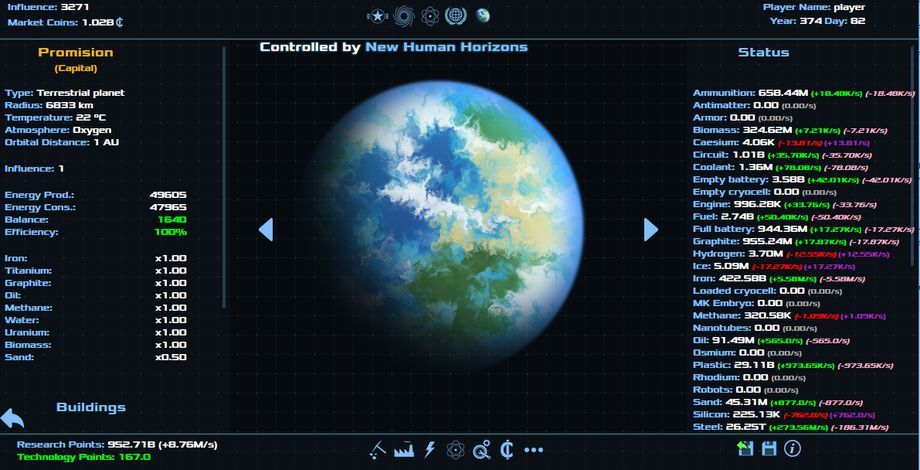
Heart of Galaxy: Horizons
Worth your timeAn idle space empire built on freight: automate the supply lines, then time travel the rest.
NGU IDLE
GreatNumbers Go Up: the #1 rated Kongregate idle, Steam's definitive big-number sandbox.