Human-powered spacecraft
Your ship's reactor is dead, your engine is a stationary bike, and the entire journey to the next star is powered by your index finger.
by Shiv · 2018-05-03 · windows
The premise deserves a slow clap. A supernova has drained your colony ship's energy reserves, the captain's solution is a jerry-rigged old dynamo, and the only crew member with the legs for the job is you. So you click. And click. Human-powered spacecraft, a tiny pixel clicker from a developer named Shiv, turns the most tired mechanic in the genre into a running gag and then, quietly, into a real progression arc with a potato farm and an antimatter distiller waiting at the end of it.
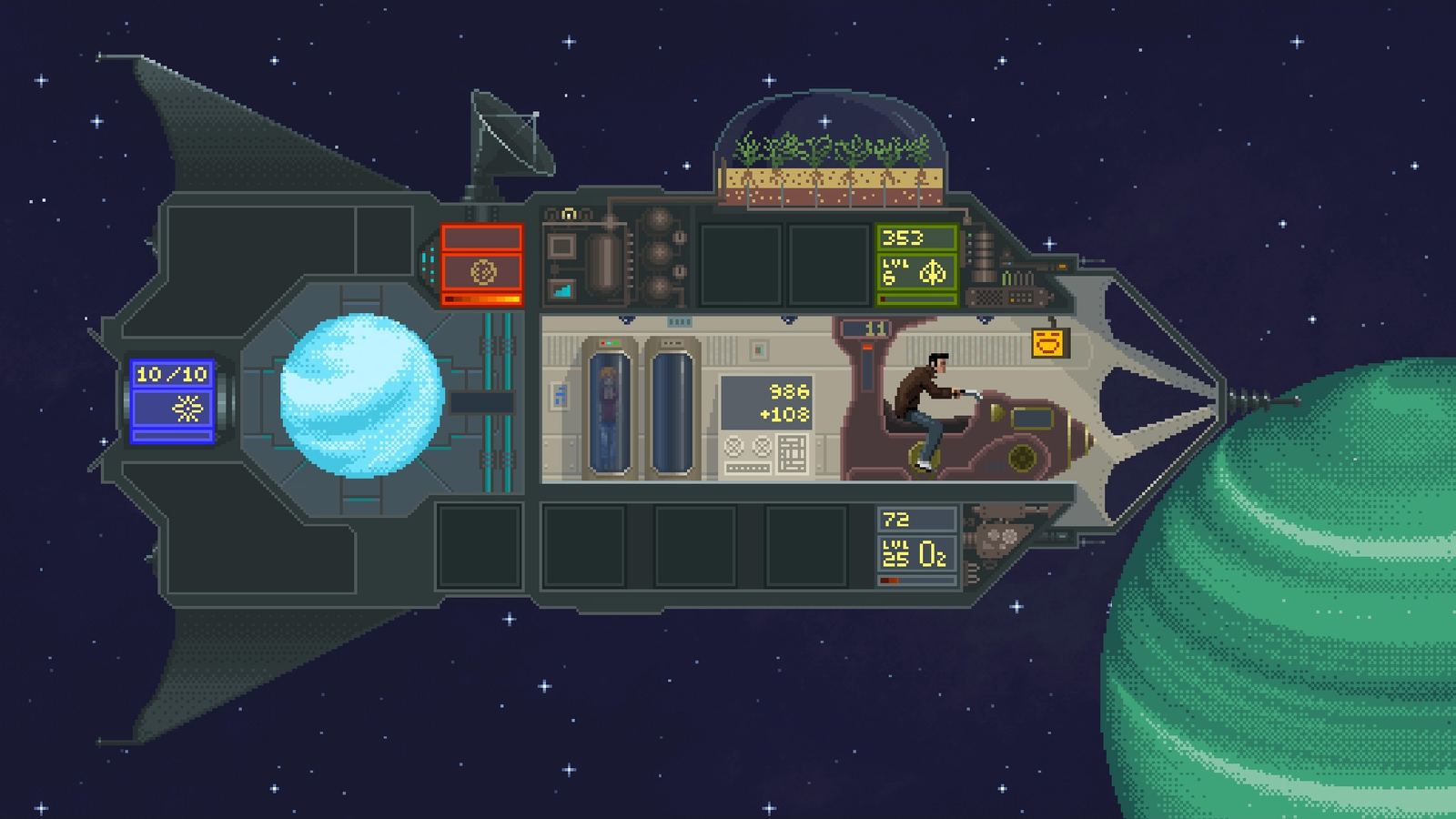
What the loop feels like
It opens exactly as advertised: you, a bike, and a snarky ship computer providing commentary while your legs do the science. The early minutes are honest manual labor, pure clicking rhythm, and the game leans into the absurdity rather than apologizing for it. Then the first upgrade lands, the dynamo starts earning while you rest, and the loop shifts from exercise to management.
From there it accelerates, literally. Energy generation scales from pedal power to a potato farm of suspicious engineering to an antimatter distiller, and the ship builds toward smooth acceleration up to hyper-speed. Space octopuses and assorted hazards interrupt the cruise, the computer keeps up its end of the conversation, and somewhere around the arrival at your destination you realize an hour has vanished. You pedal the last stretch, settle back into cryosleep, and wonder why a game this small got a genuine ending. That's Human-powered spacecraft.
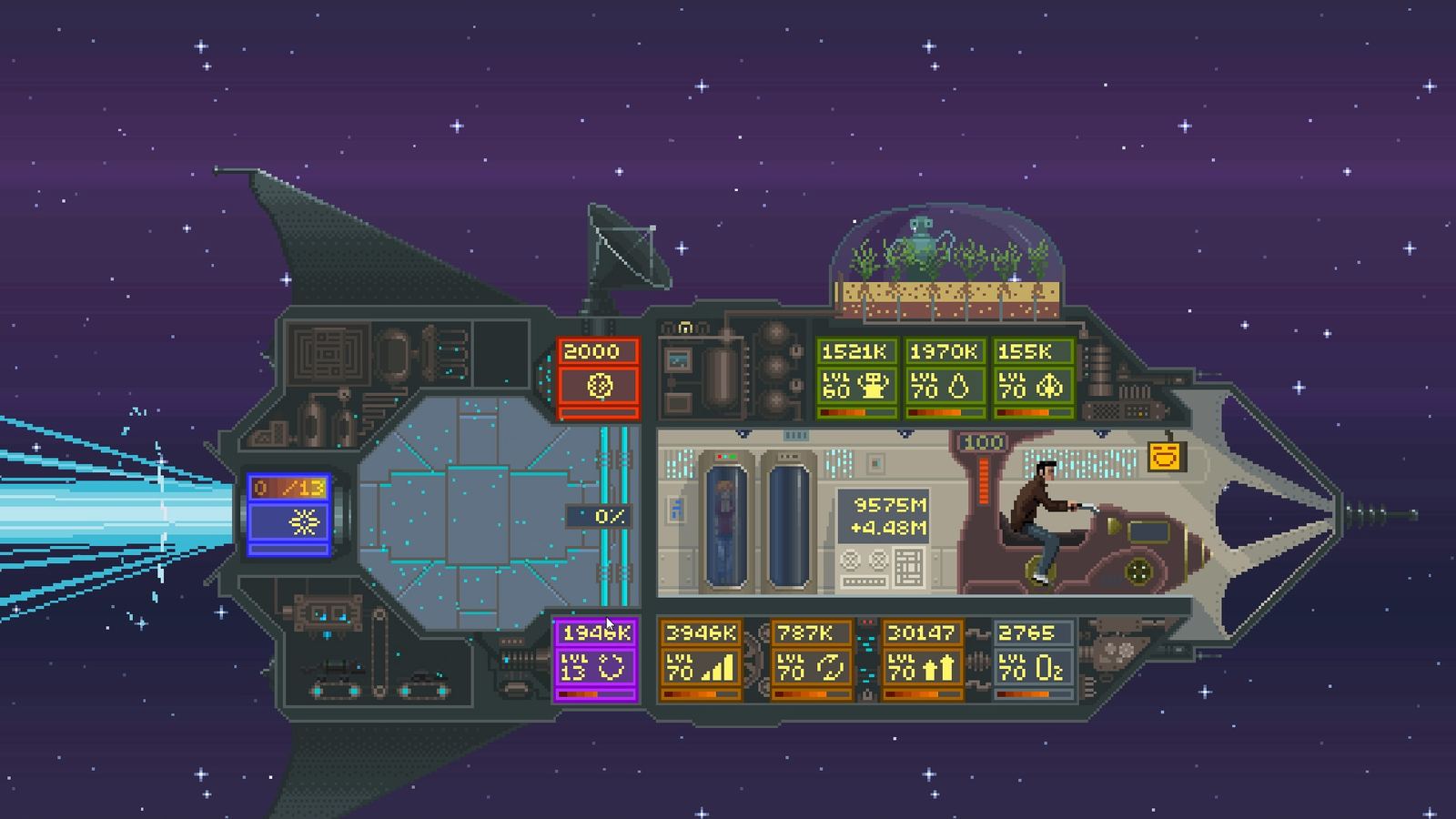
The systems that move the ship
This is a classic arc compressed to pocket size. Manual clicking feeds the dynamo early, upgrade purchases convert that effort into passive generation, and each new power source, from potato agriculture to antimatter distillation, resets the scaling curve one tier higher. Automation eventually replaces your finger entirely, leaving a short, tidy idle game with a beginning, a middle and a destination. The whole thing ships with retro pixel art, an original soundtrack and, as the store page proudly notes, no lootboxes.
Where it creaks
The honest answer is scope. Community consensus puts the full experience at roughly 40 to 90 minutes, and that is not an exaggeration: there is no deep lore, no management tree, and essentially no reason to return once the ship reaches its destination. The opening stretch is heavy on raw clicking before the idle upgrades arrive, which will grate on anyone allergic to the genre's origins. Compared to sprawling space sims there is no simulation to speak of, it is an abstract, tongue-in-cheek contraption rather than a universe. If you want a loop with hundreds of hours in it, something like Incremental Epic Hero is the better spend. What saves this one is craft: players consistently single out the cohesive pixel art, the original music and the genuine charm, a world away from the recycled asset flips that usually live at this price.
Playing it today
Human-powered spacecraft is a Windows-only release on Steam, with achievements and family sharing. It has never had a mobile version, so the store page above is the only verified way to play. Given the runtime, it is best treated as one delightful lunch break.
The verdict
This is a novelty, and a well-executed one. The writing is genuinely witty, the art direction is coherent, the upgrades escalate from ridiculous to transcendent, and the whole journey costs less than a snack. Judge it as a thirty-dollar epic and it is a shrug; judge it as pocket change for ninety minutes of jokes and pixels and it is one of the better trades on the storefront. Pedal on, colonist.
If you like Human-powered spacecraft
mechanic-matched
Autocraft
A tiny idle RPG about a champion who loots, sockets gems into a shield, and fights while you do other things.

CapitalismCraft
A satirical clicker about exploiting cute animal desk workers, firing managers before payday, and fighting the unholy idea of labour rights.

Coin Smith
From a Blacksmith Hammer to a Galactic Smelter: forge the first coins of Lydia, then turn asteroids into currency.

Dead Profit
Hell and Heaven are at war, and you are the arms dealer: mine, craft and enchant magical weapons against the clock.