Microcivilization
A 4X civilization squeezed into a clicker, where mammoths, plagues and barbarians keep your growth honest.
by Ondrej Homola · 2026-01-22 · Windows
Most civilization builders want an evening and a map the size of a continent. Microcivilization wants fifteen minutes and your full attention. Ondrej Homola's hybrid distills the whole 4X ritual, explore, expand, exploit, exterminate, into a pixel-art clicker where your society grows one tap at a time and history is happy to punch back.
What the loop feels like
Your first run is small and tactile. You click for food, population ticks upward, and the first crude structures appear on the strip of land that stands in for an empire. It feels almost cozy until a fire rips through a granary or a war band shows up at the border and your careful math has to survive contact with an emergency.
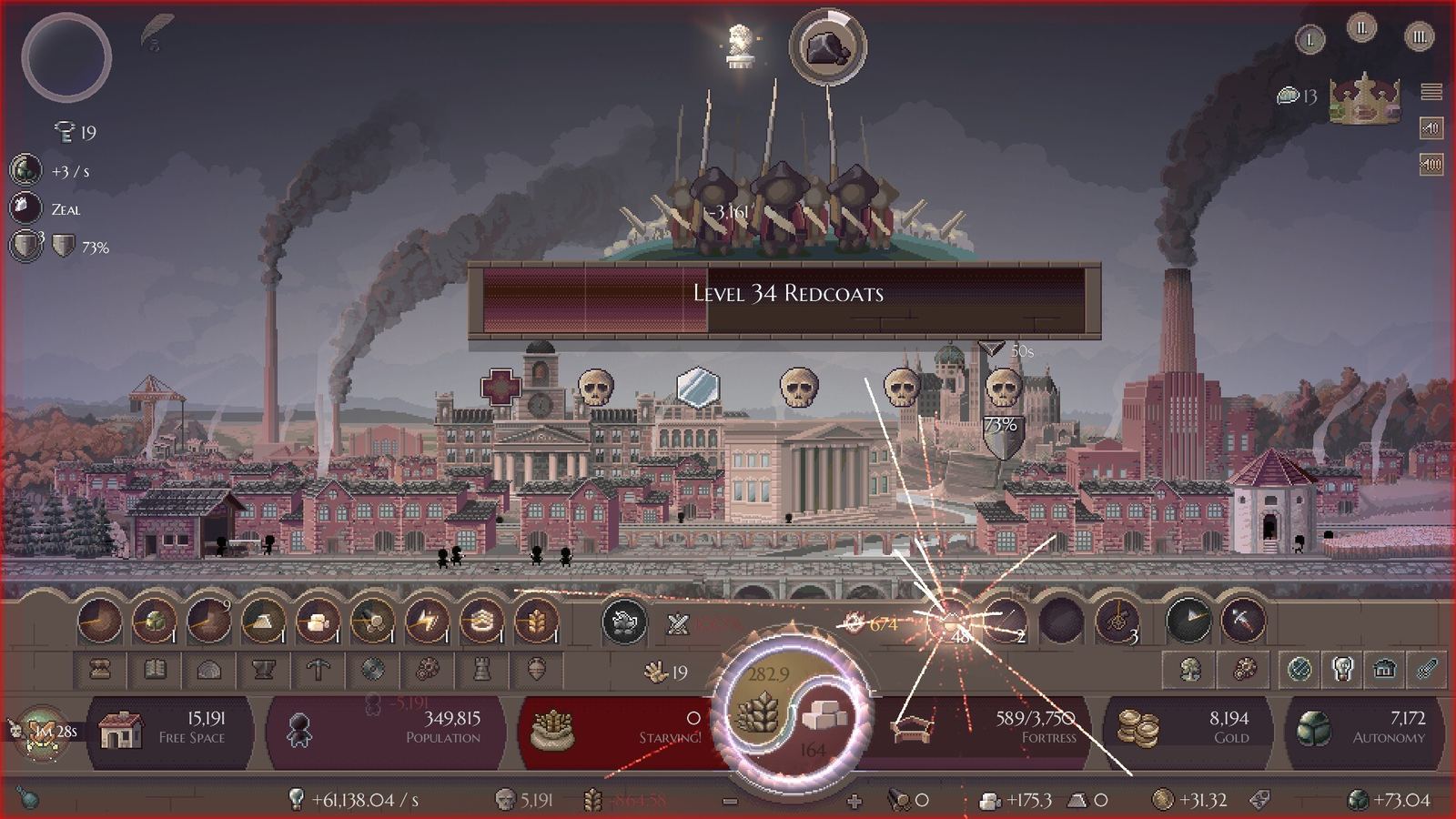
Later, a run looks different. Workers farm and build while you juggle a tech tree, slot heroes with combat and construction abilities, and weigh a moral choice that will ripple through the era. A plague lands, you ride it out on stockpiled food, and the moment passes. That's Microcivilization.
How the systems fit together
The spine is a dual resource loop: food grows your population and speeds research, while building materials feed the improvements you unlock on the technology tree. Early on you generate both by hand, and the game gradually hands the work to automated structures and workforce allocation, which is where the idle half of the identity lives.
Layered on top is the crisis system. As your civilization swells, escalating threats like wars, plagues and civil unrest test your total population, economy and military power, so raw growth is never a safe strategy. Heroes add a collection layer, hundreds of them, each with ability builds for combat or construction, and government combinations let you restructure how the whole machine behaves.
The prestige layer ties runs together. When a run ends or stalls, you reset and carry over permanent meta-upgrades, including lotuses that make the next attempt faster and more resilient, and a challenge campaign walks you back and forth through history across difficulty tiers. If you have played pure idle games like CivClicker or strategy-first takes like Realm Grinder, this sits deliberately between the two.
Where it stumbles
The marketable version of this game is a relaxed second-monitor toy, and the crisis system disagrees. Back-to-back disasters can feel punishing and RNG-heavy, capable of wrecking a run that was going perfectly, and some players bounce off that tension entirely.
The reset loop divides opinion too. Reaching later eras takes multiple restarts, and while you retain generals and heroes, some players feel the grind stretches playtime artificially. And if you come in expecting the deep simulation of a full 4X, the minimalism is the point but it will not pretend otherwise.
Playing it today
Microcivilization launched its 1.0 on Steam in January 2026 after a stretch in early access, and it is a Windows release with Steam Achievements and Steam Cloud support. There is no mobile version, so the Steam page is the only official way in. If the reset-loop side of it hooks you, Clicker Heroes and Trimps are catalog picks that scratch the same prestige itch.
The verdict
Microcivilization earns its niche by refusing to be passive. It punishes mindless clicking, rewards systemic balance, and turns the 4X loop into something you can finish a run of before dinner. If you want strategy decisions in your incremental and do not mind a crisis occasionally burning the house down, this is one of the more interesting hybrids on Steam.
If you like Microcivilization
mechanic-matched
ClickRaid
A multiplayer incremental where the chatroom is the dungeon. Mostly Positive historically, but the community that made it work has largely moved on.

A Mining Game
A free multiplayer idle mining sim where the leaderboard is the idle check: dig, build an army, climb the combat tower with friends.

Immortal Clicker
Cultivate your inner strength, deploy sword spirits and awaken runes: a xianxia-flavored tapping loop.
DripStat Idle
A Java monitoring company built a clicker where the whole community tried to leak RAM together. It died, and ten years later the fans dragged it back.