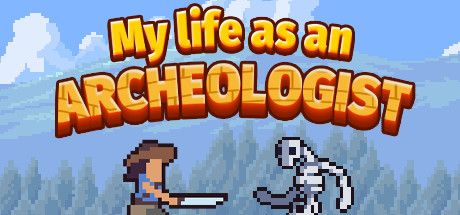
My life as an archeologist
A clicker roguelite where every run digs deeper, every boss offers an artefact, and even death counts as research.
by Delirium Tremens Games · 10 Jan, 2022 · Steam (Windows)
Somewhere between the mindless joy of a clicker and the ever-renewing decisions of a roguelite there is a dig site, and My life as an archeologist is the game that built on it. Delirium Tremens Games released it on Steam in January 2022: a clicker roguelite with 100 levels of treasure hunting, more than sixty types of equipment looted from more than sixty fully animated monsters, and a meta layer where every monster you kill advances your research, whether the run survives or not.
It found a Very Positive rating from several hundred reviewers, who consistently describe it the same way: a hidden gem that punches above its weight, fun for about eight to ten hours, and completely finished rather than endless. In a genre where done is a dirty word, that is almost radical.
What the loop feels like
You click through a dig level, a monster drops a relic, and your inventory asks whether you are really going to carry that. That's an archeology run.
A boss dies, three artefacts gleam on pedestals, and one of them will define the rest of your expedition. That's an archeology run.
You die on level sixty, mutter something unscientific, and notice your monster research advanced anyway. That's an archeology run.
Fusion, classes and the research ledger
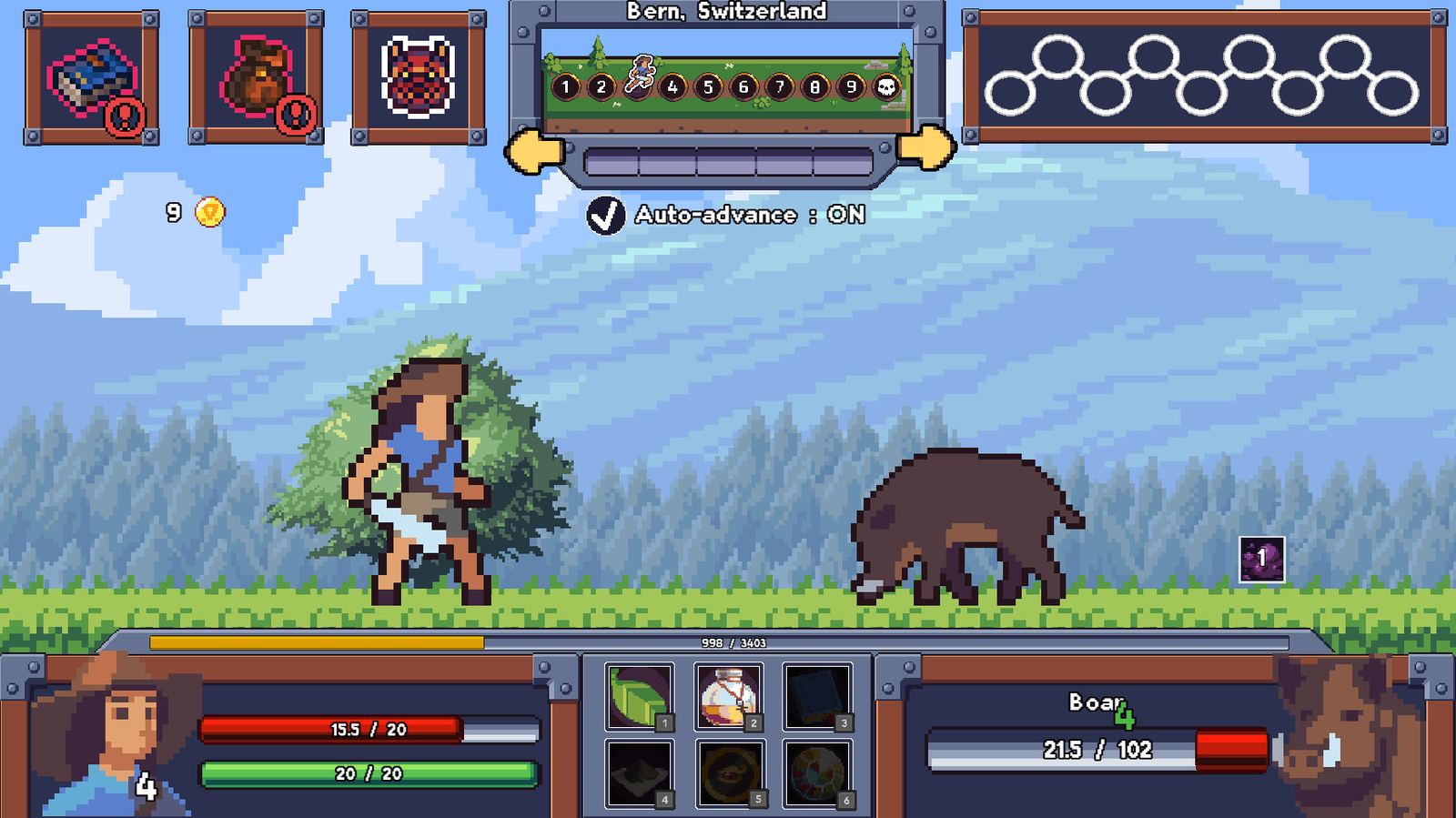
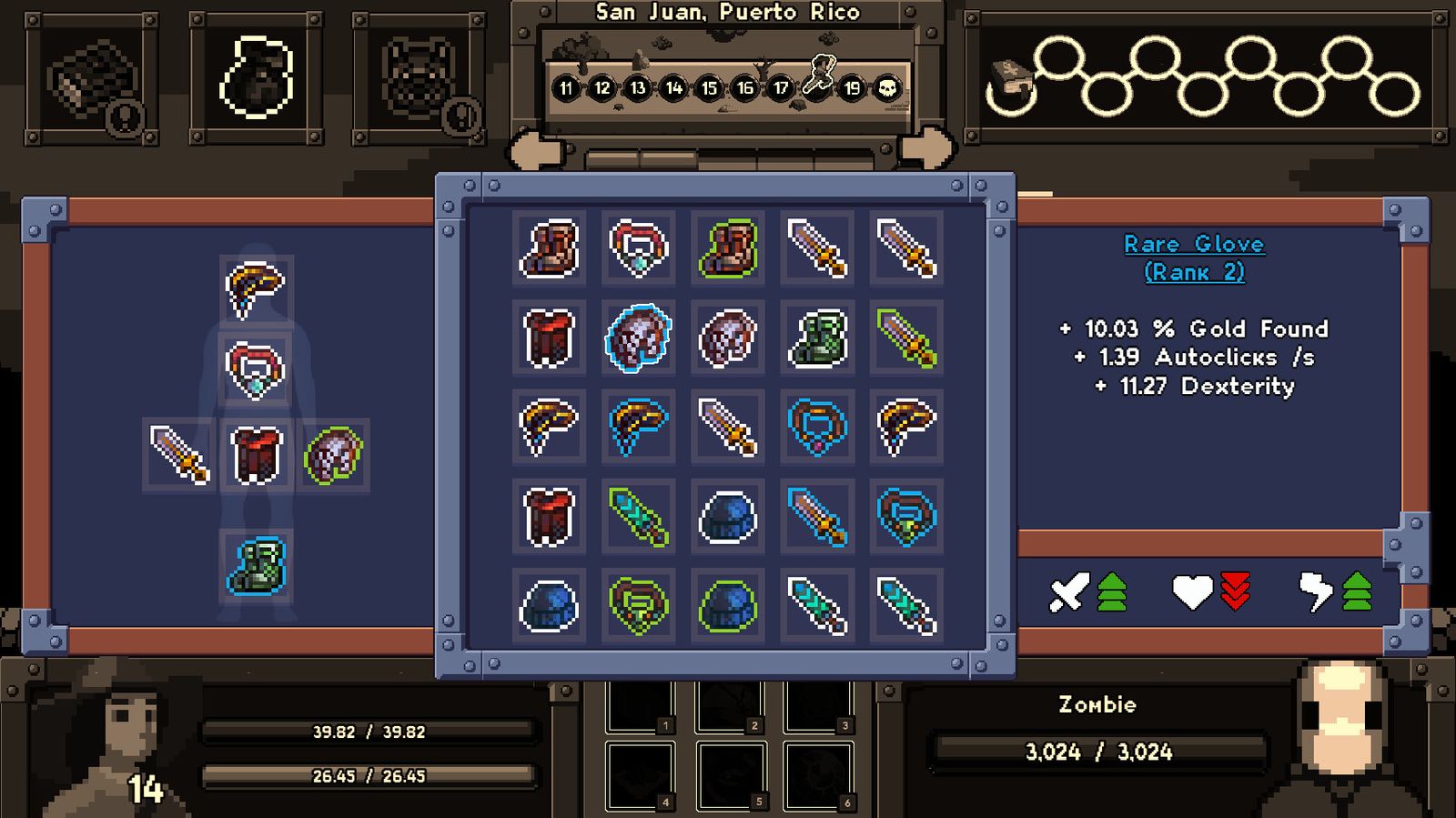
Three systems carry the game. First, inventory fusion: three items of the same type and rank fuse into a superior tier, and if your pack fills up the game auto-fuses or discards older duplicates, turning loot management into a light tetris of compounding stats. Veterans say embrace fusion early and never let the inventory bottleneck you.
Second, the artefact draft. Each run features up to ten bosses, and each one offers a choice of three run-defining artefacts: chances at explosive damage, time stop, a ferocious turtle companion, a healing fairy. Third, the three classes genuinely play differently: the bulky zoologist specialises in poison and survivability, the cunning ethnologist manages energy around ancient machinery, and the never-alone theologist lets summoned spirits do the dirty work while she relaxes.
Underneath the runs sits the research ledger, the true incremental layer. Every kill feeds monster card research, and enough coins let you buy the monsters' powers permanently, so dying is never a total loss. Community strategy says to balance pushing depth against farming specific monsters for card bonuses, because the compounding baseline power is what breaks the next wall.
Where it stumbles
The main complaint is the lifespan: it wraps up too quickly for anyone seeking a long-term idle commitment, with no endgame scaling beyond the credits. Progress can bottleneck on RNG, when the right drops or card combinations refuse to arrive, and early runs demand real clicking until the auto-clicker and quality-of-life unlocks arrive, though holding the mouse button down is a legitimate community-sanctioned technique. It is also a static, complete experience, with no live-service tail.
Playing it today
Available on Steam for Windows at a budget price, single-player, with achievements. The platform check found no mobile version by the same developer.
The verdict
A tight, charming weekend incremental: loot, fuse, draft artefacts, die productively, repeat. If it leaves you hungry for a longer grind, Digseum and Mr. Mine dig in the same direction with bigger shovels, and Clicker Heroes remains the classic the clicking half descends from.
Community
If you like My life as an archeologist
mechanic-matched
Beaver Clicker
An idle game with one goal, collect L O G, and the strangest recruitment pipeline in the genre: squirrels, school field trips and tamed fungi.
Chonkers
A cat-flipping idle economy in a cozy trench coat: adopt, chonkify, sell by the kilo.
Creature Clicker - Capture, Train, Ascend!
Clicker Heroes meets monster collecting, in an Early Access build that has been Early Access since 2017.
Dwarf Eats Mountain
GreatA strategic incremental about feeding dwarves to a mountain, and the logistics of getting the gold back out.