
Pincremental
A real pinball table fused to an idle game: bounce, cash out for Tickets, automate the flippers, then climb from one machine to owning the arcade.
by Makopaz · 2020 · Steam, iOS
Pincremental starts with an actual pinball table. Not a picture of one, a simulated board where a ball bounces off bumpers and walls and paddles, each hit paying out points, and every point feeding an upgrade economy that slowly eats the game you were playing. Makopaz launched it free on Steam in 2020, later brought it to iOS under the same studio, and the pitch is right there in the store copy: become the Pinball Wizard you were destined to be, then automate yourself out of a job.
What the loop feels like
A ball drops, you flick the flippers, points tick up with every bounce. That's Pincremental.
You buy a better bumper, a faster ball, an auto-paddle, and the table starts playing itself. That's Pincremental.
You cash everything out for Tickets, buy permanent perks, and the next run is twice as fast. That's Pincremental.

From one table to a corporate empire
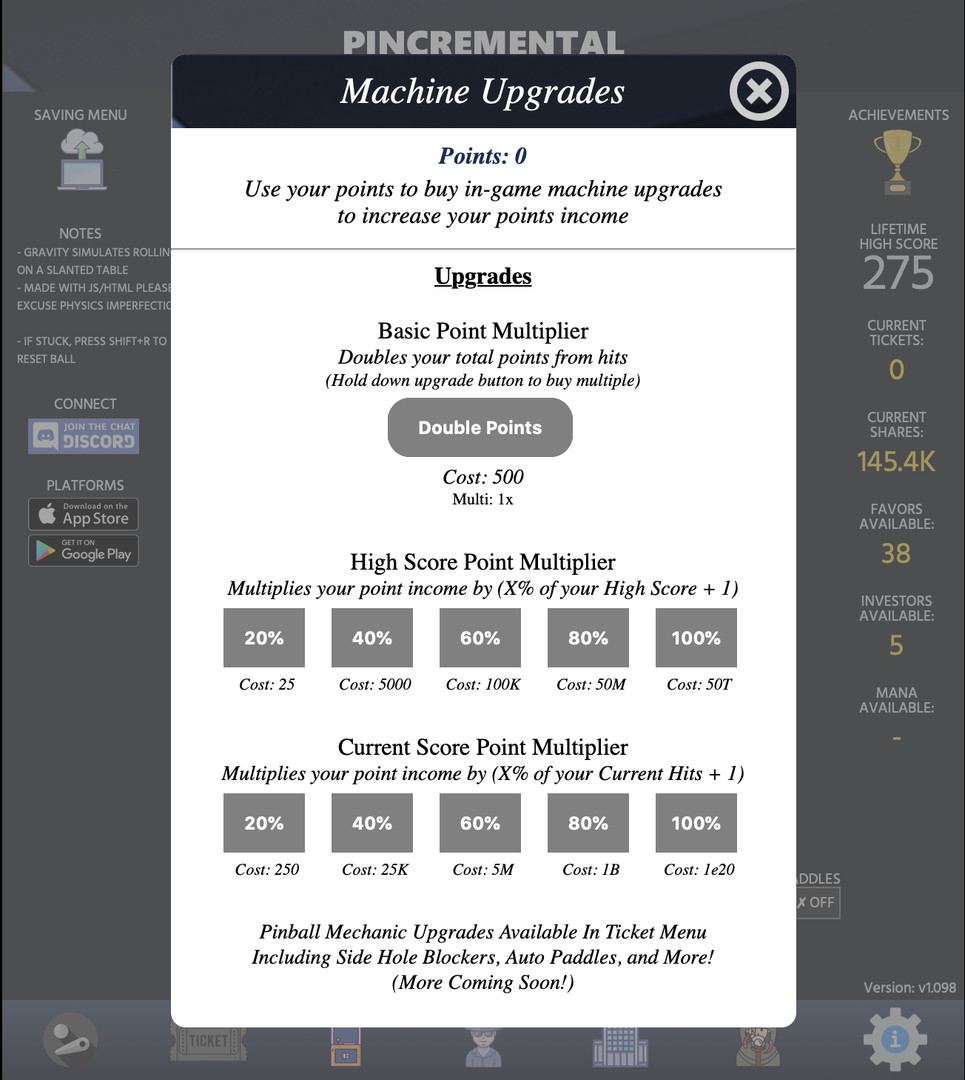
The escalation ladder is the charm. Tickets are the soft-reset currency: cash out your score, buy permanent upgrades like side-hole blockers and auto-paddles, return stronger. Deeper in, the frame widens from a single machine to a business, with corporate favors, side businesses and eventually full Arcade Ownership, a heavier reset layer that generates passive income while you build the next stack. The store page counts five prestige levels and more than sixty unique upgrades, and the community favourite joke is the upgrade chain that automates play, then automates upgrades, then automates automation, then automates the automation of automation. The base table physics are licensed from Will Boyd's pinball functionality, which is why the ball actually behaves like a ball rather than a random number generator with a sprite.
Where it stumbles
The board never really changes. Players point out that beyond side blockers and multipliers, the table itself stays static, so the fantasy of reshaping your own machine never quite lands. The endgame is shallow by genre standards: once the automation is fully stacked, progress flattens into plain number-go-up with no final boss or grand quest to test your build. And the monetization gets misread, with some reviewers yelling pay-to-win when the community consensus is that it is a one-time purchase to remove ads plus a small quality-of-life multiplier. None of this stops it being a charming free afternoon, it just stops it being a hundred-hour one.
Playing it today
Free on Steam for Windows and Mac, with an iOS version under the same developer, Makopaz LLC, verified at check. Cloud saving carries progress between the two.
The verdict
A delightful novelty with real incremental bones: the physics give it texture that spreadsheet-idles lack, and the Tickets-to-arcade ladder is a genuinely funny escalation. Play it for a weekend, not a season. When you want your bouncing ball paired with combat, Incremental Cubes trades pinball for cube-tossing, and Loot Box Quest brings the same game-inside-a-game gag to gacha satire.
If you like Pincremental
mechanic-matched
AdVenture Communist
Worth your timeThe idle game with missions instead of mindless clicking: potatoes in, Supreme Einsteins out.

Celldom Classic
A web hit about swiping a grid instead of clicking a button, rebuilt for Steam with all its rough edges intact.

Clicker Heroes
Worth your timeThe idle RPG that taught a whole genre to count.

Clicky Coven
A witch assembly line where the bottleneck is real and the cauldrons can outpace the harvest.