Train Metropolis
Run the railway, untangle the jams, and watch a city grow around your timetable.
by Crystalline Green Ltd. · 28 Mar, 2025 · Steam
Train Metropolis starts with a quiet patch of land and a railway company, and asks a politely incremental question: what happens if you just keep the trains running? Crystalline Green Ltd., the studio of developer James Coote, released this Windows idle in March 2025, and its answer is a city that builds itself around your timetable.
What the loop feels like
The early game is one line and a town with simple needs. You connect districts, the train shuttles what one district makes to where it is wanted, and the city pays you back by growing. There is a real small-pleasure rhythm to watching a junction you optimized clear its first backlog. That's Train Metropolis.
Growth brings traffic, and traffic brings jams, and jams turn your elegant network into a puzzle you fix with clicking and rerouting. The game keeps one foot in idle income and one in active untangling, and the swing between the two is where its personality lives. That's Train Metropolis.
How it actually works
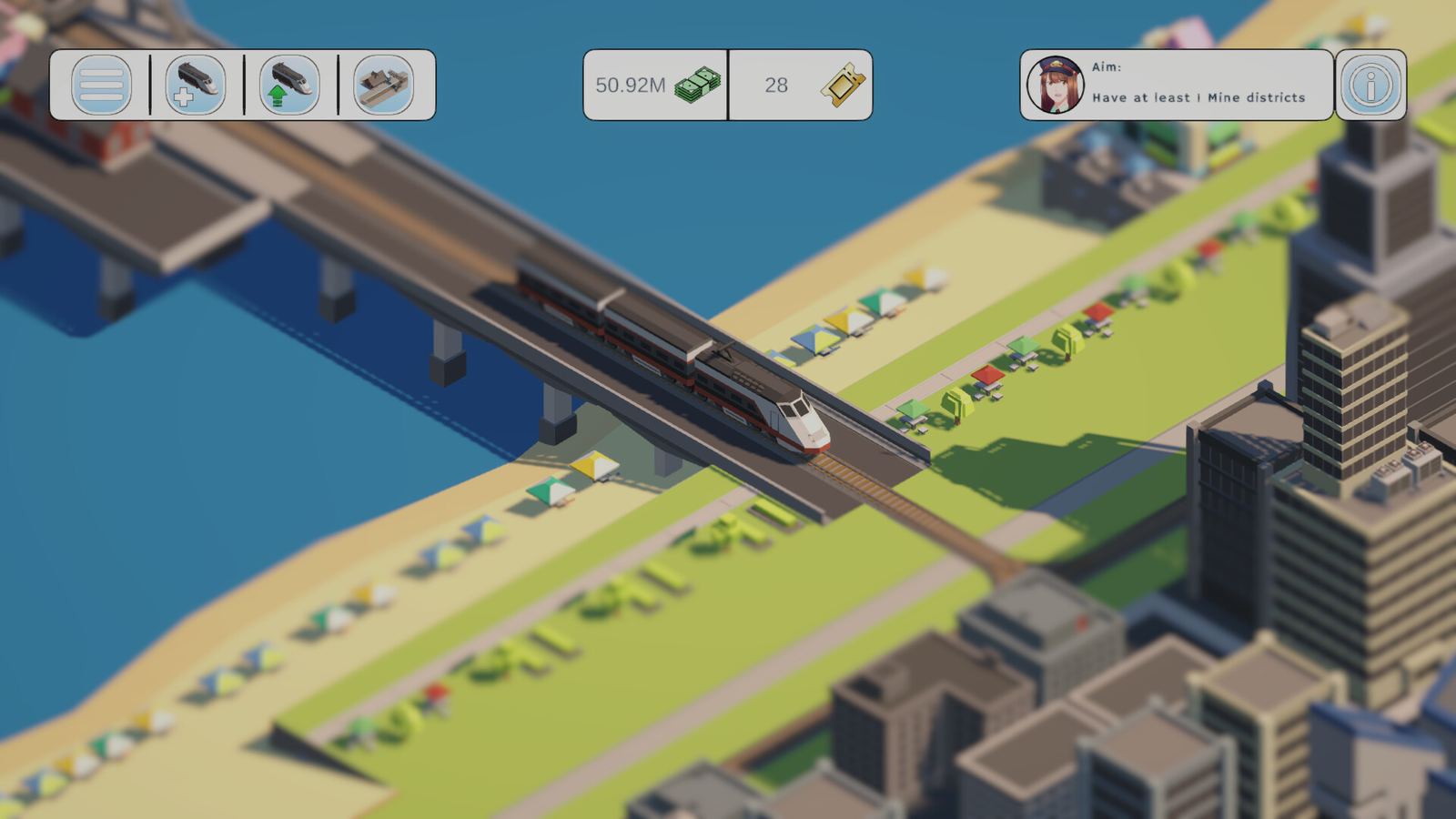
The systems stack in three layers. Route management sits at the core: you assign trains to run between distinct city districts, each of which generates the specific goods or passengers that other districts need, and you buy and upgrade an ever-increasing fleet, tuning trains toward speed for quick passenger turnarounds or capacity for bulky freight. District leveling is the demand engine: feed a district the exact combination it asks for and it upgrades, with higher levels exponentially increasing what they demand, so bottlenecks emerge naturally as the backwater becomes a metropolis. And the city building is inverted from the genre norm: you never draw roads or lay track piece by piece, you found districts, choose their upgrade paths, and let the transit network dictate how the town evolves. Farmland becomes suburbs, suburbs become downtowns, and the map becomes a diagram of your own routing decisions. The community's core advice is balance: do not upgrade districts faster than your fleet can service them, since a starving district stalls revenue.
Where it stumbles
The hybrid identity cuts both ways, and the community's verdict comes with conditions. Players who want pure idle income find the jam management too demanding, with right-clicking to overload commuter trains and left-clicking moving trains for speed boosts turning genuinely fatiguing once the fleet grows fast enough to outrun your mouse, panning across the map to chase trains that zoom off. Players who want a real tycoon simulation find the economy too light, since tracks auto-connect and signaling does not exist. The browser demo versions have also lagged the native build on frame rate and the tilt-shift visual features. The landing zone, which most players seem happy with, is the cozy middle: forgiving where Mini Metro is punishing, abstract where Transport Fever is exhaustive.
Playing it today
On Steam for Windows, with a demo on the store page and the developer's free web build on itch.io for trying before buying. For other infrastructure-flavored idles, Idle Tower Builder and Transport Defender cover adjacent ground on this site.
The verdict
A gentle, clever hybrid that treats a railway network as a living machine you coax rather than command. Come for the trains, stay for the city your timetable accidentally built.
If you like Train Metropolis
mechanic-matched
Holyday City: Reloaded
Ten businesses, one happiness bonus, and a city that earns while you sleep
Hot Springs | 温泉 (Onsen)
A Japanese hot spring idler: build a garden, raise koi and cats, and let a serene world run in the background of your work.

Lazy Galaxy 2
Base-building incremental with light RTS battles, spatial grid synergies and a candy-powered prestige tree, starring the laziest evil aliens in the galaxy.

Refarm
Worth your timeThe ocean took everything. Take it back one tile at a time: a short, pretty, click-heavy island reclamation idle with a genuinely good ending problem.