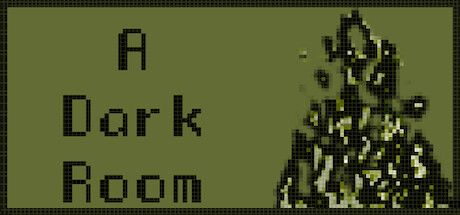
A Dark Room
A fire stokes. A stranger stumbles in. The village grows. You know what you did in the forest.
by Doublespeak Games (Michael Townsend); Steam/Switch by Amir Rajan · 10 June 2013 (web) · Web / iOS / Steam / Switch
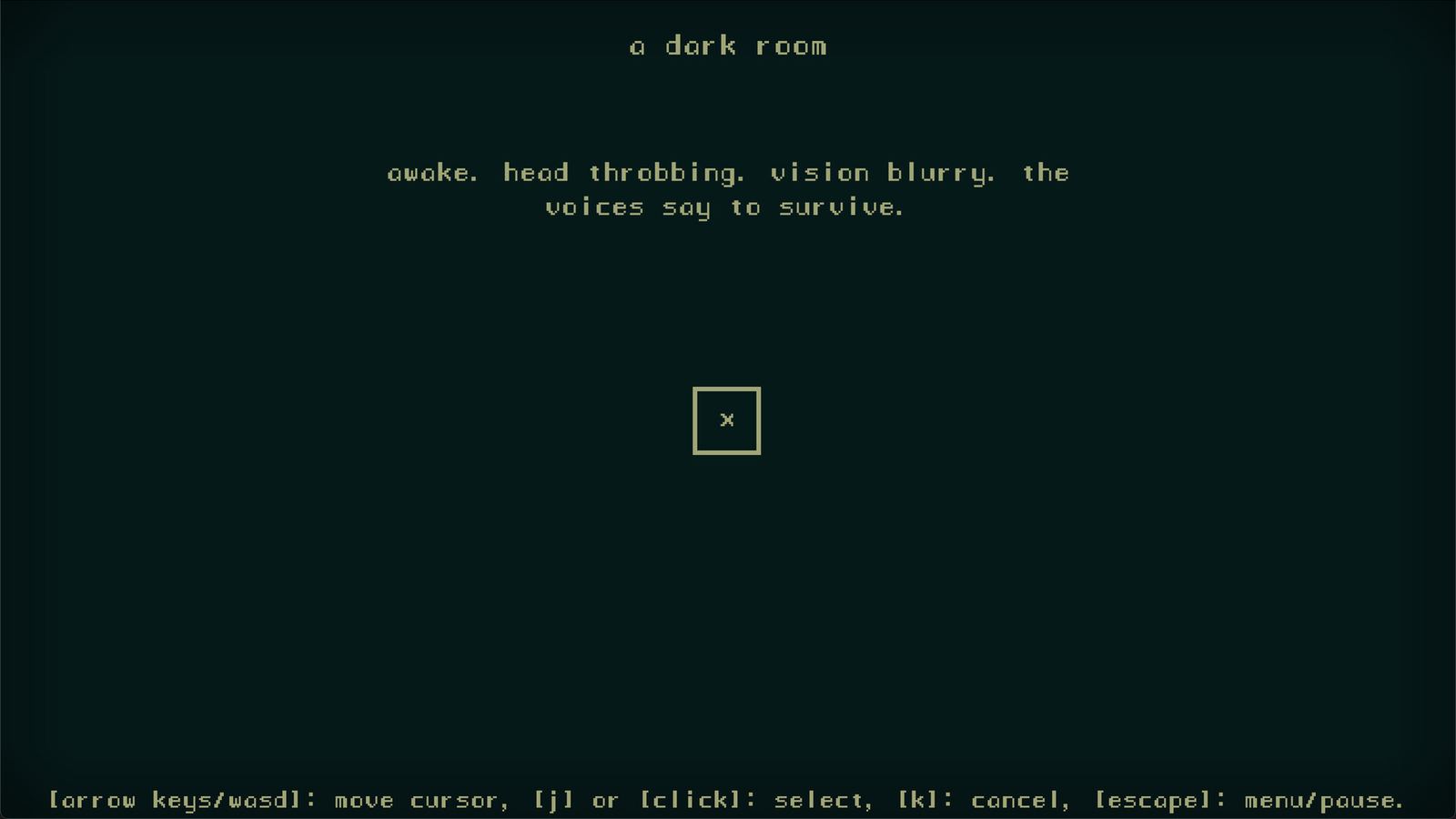
The room is cold and dark. There is a fire, and it is dying, and there is a stranger in the corner who says nothing. You stoke the fire. That is the first thing A Dark Room asks of you, and it is also the last simple decision you will make in it.
Michael Townsend built it in 2013 for the browser under the Doublespeak Games name, and within a year this quietest possible pitch, light a fire and find out why the world is the way it is, had eaten entire subreddits, topped the App Store's paid chart in Amir Rajan's iOS port, and set the standard every text incremental since gets measured against. It takes a few focused hours to finish, and it ends.
What the loop feels like
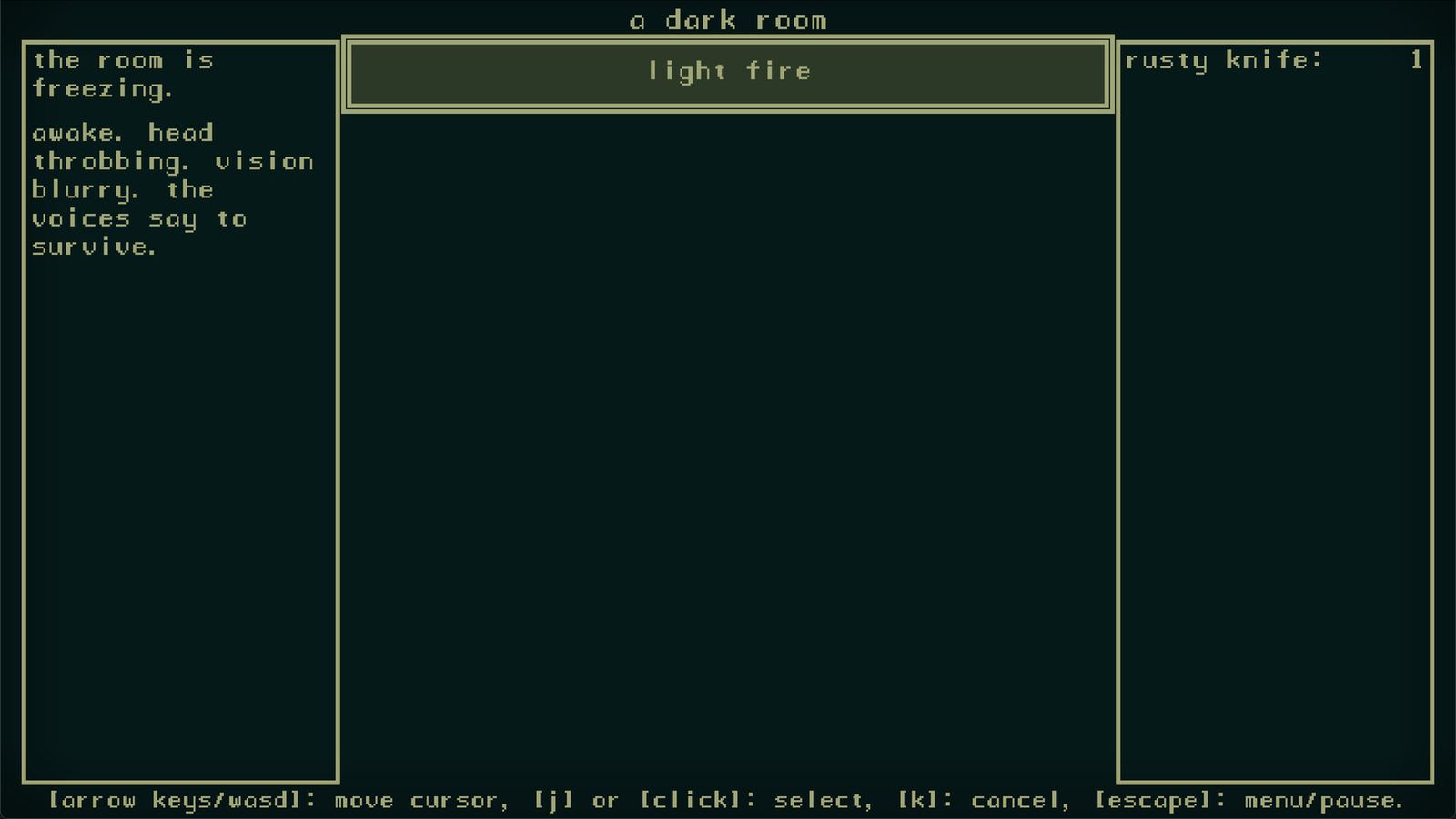
You stoke the fire and the room warms, wood accumulates, and a builder arrives with nowhere else to go. Huts go up, wanderers drift in, and the village starts breathing on its own. That's A Dark Room.
The village grows jobs instead of numbers: hunters, trappers, tanners, woodcutters, each converting fur, meat and lumber while you plan the next expedition. Then a dusty path opens at the edge of the map, a compass gets built, and the management sim you were playing quietly becomes a survival RPG with a desert in it. That's A Dark Room.
The systems doing the work
The game moves through three distinct phases. The Room is one button and one resource, warmth traded for wood. The Village is where automation arrives: traps harvest meat and fur passively, huts set the population cap, and every idle mouth eats, so veteran advice is to build traps early and resist over-building housing until you have jobs ready. The Path is the third act, a grid-based wilderness where every tile moved consumes food and water, combat is real-time and turn-based in equal measure, and dying out in the wastes costs you your entire inventory.
Experienced players stockpile cured meat and iron before long expeditions, carry a backup weapon because tools degrade, and clear outposts systematically, since scavenged mines and ruined villages unlock the advanced technologies, steel, coal engines, better armour, that the late game demands. The whole thing resolves in a structured narrative conclusion rather than an infinite curve, which alone makes it a rarity.
Where it stumbles
The famous weakness is the transition. A visible portion of players drop the game exactly when it shifts from claustrophobic village-builder to ASCII map exploration, finding the tactical loop flatter than the atmosphere that preceded it. Repeat visits surface repetition too: resource gathering and map scrubbing can turn grindy once the mystery is spent. And because the magic is the unfolding of it, replay value is genuinely low; the second playthrough never hits like the first. These are honest costs for a game whose entire currency is surprise.
Playing it today
Play the web version first: it is free, complete, and the purest form of the thing. The 2023 Steam release and the App Store port are the same fire, packaged, with the Steam and mobile versions coming from Amir Rajan. If the structural-escalation trick lands for you, Universal Paperclips is the natural next stop, and Candy Box 2 scratches the same starts-small-becomes-epic itch.
The verdict
A Dark Room is the idle genre's best argument that restraint is a mechanic. No tutorial, no quest log, no explanation, just systems that keep revealing one more layer and a story told in inventory lists and implications. Its flaws are real and all downstream of the same design decision, but a game that respects your time this much and surprises you this thoroughly earns its reputation a dozen times over.
Gameplay videos
If you like A Dark Room
mechanic-matched
Candy Box 2
★ EssentialThrow candies at frogs, save for a wooden sword, and descend into hell. aniwey's 2013 ASCII epic.
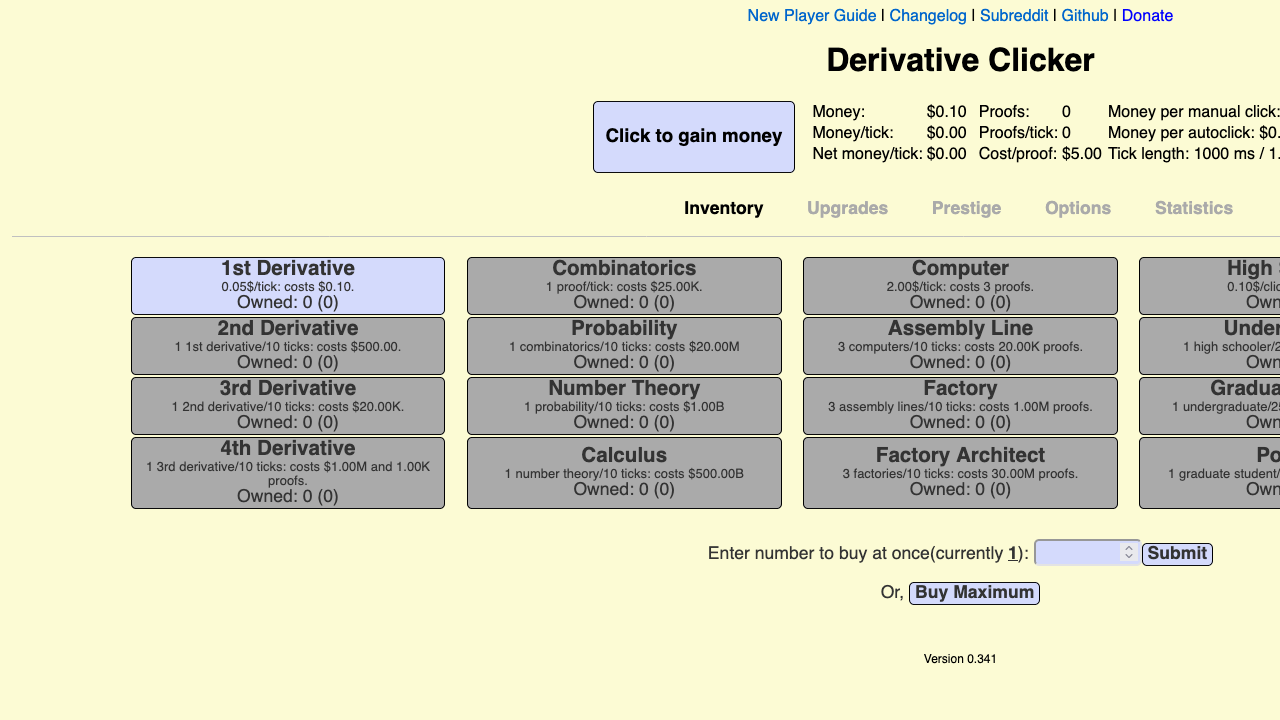
Derivative Clicker
Buy derivative generators that buy mathematicians that buy computers: calculus as an idle game.
Swarm Simulator
GreatMeat, larvae, drones, queens, and eventually the stars: the 2014 text incremental that taught a genre what exponential really looks like.
Evolve
GreatFrom primordial ooze to spacefaring empire: pmotschmann's civilization-builder incremental.