
SPACEPLAN
Jake Hollands' potato-powered orbital idle, published by Devolver: launch, orbit, ascend, repeat.
by Jake Hollands · 3 May 2017 · Steam / Mobile / Web
SPACEPLAN describes itself as an experimental piece of interaction based partly on a total misunderstanding of Stephen Hawking's A Brief History of Time, which is both a joke and an accurate technical summary. Jake Hollands built it, Devolver Digital published it on May 3, 2017, and the whole thing runs on one of the finest absurd premises in the genre: you generate power with potato-powered devices in orbit. Steam's summary of player sentiment sits at Very Positive, and the game runs about the length of a good film, which is exactly right for what it is.
The structure is pure incremental, but the pacing is not. Where most idle games are designed to run for months, SPACEPLAN is a story told in exponentials, a two-hour arc disguised as a clicker. The potato theme starts as a gag, escalates through satellites and interplanetary launches, and keeps escalating long after you have stopped asking why. There is a narrative waiting at the far end, and the numbers carry it.
What the loop feels like
You tap a potato for your first watt, buy a second potato, and before you know it your screen is full of launch buttons, orbit lines and a counter that has quietly acquired a scientific notation. That's SPACEPLAN.
Then the game reveals what all this potato infrastructure was actually for, and the punchline lands with genuine force for a game about root vegetables. That's SPACEPLAN.
How it actually works
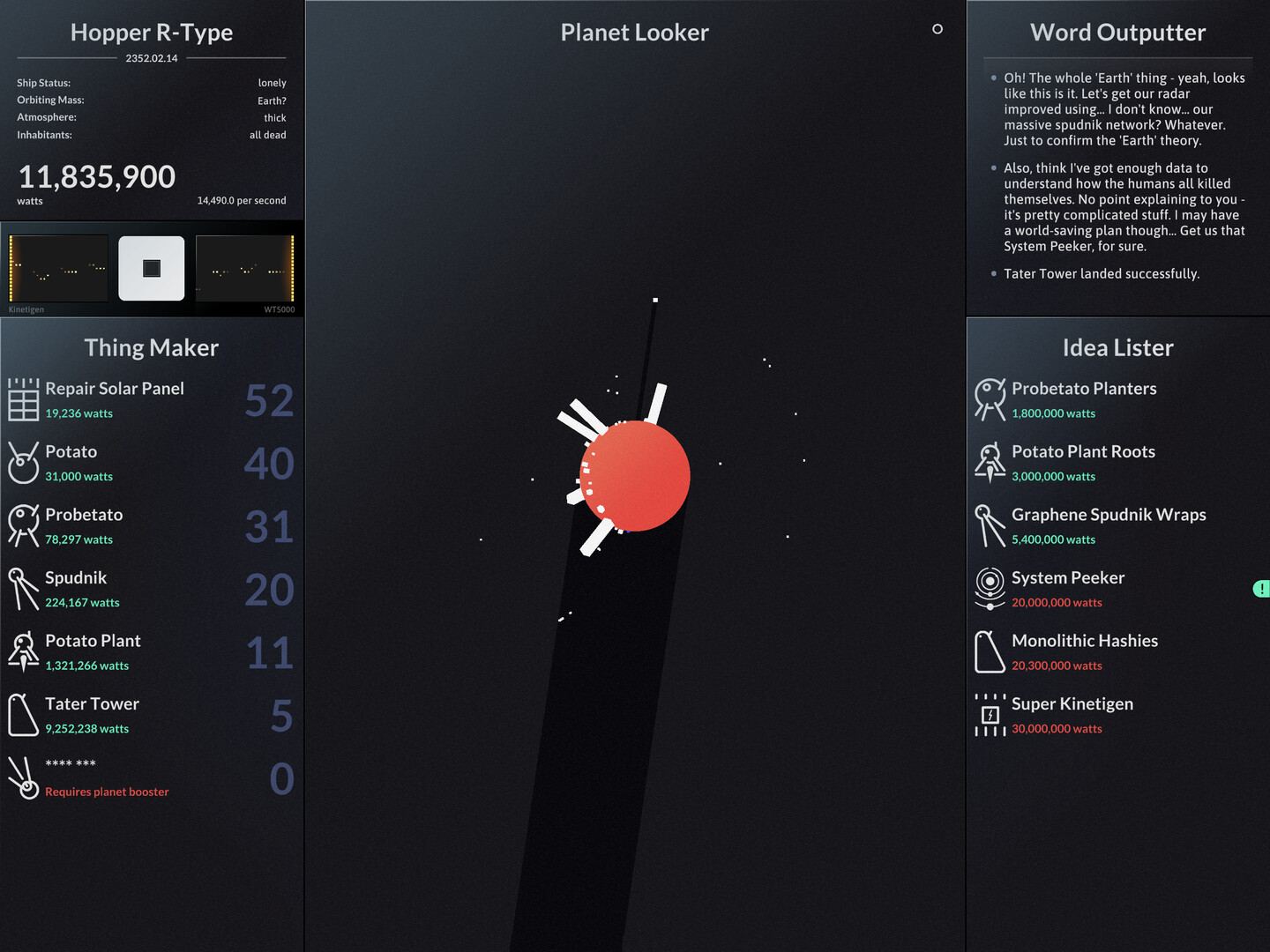
Three systems interlock. Power generation is the heartbeat: potatoes and their upgrades produce the watts that fund everything else. Launch infrastructure spends those watts on satellites, probes and crewed missions, each tier unlocking new orbital hardware. And a time-warp system lets you accelerate the simulation when manual tapping falls behind your production curve, an admission that the game trusts you to skip its own grind. Manual launching and auto-launching run side by side throughout, so the game is as active or as idle as you want it to be at any given moment.
The prototype is still instructive context: Hollands' original web build showed the shape of the idea before Devolver polished it, and the commercial version layers achievements, a soundtrack and a proper ending over the same skeleton.
Where it stumbles
The main caveat is length. If you arrive expecting a months-long idle commitment, SPACEPLAN ends before your coffee habit does, and its replay value after the finale is thin since the story is the payload. The mid-game also has a stretch where the correct strategy is simply to wait on the time-warp, and players averse to any manual tapping will find the early minutes slow. None of this hurts what it is trying to be; it only means the game should be bought as a narrative incremental, not as a lifestyle.
Playing it today
Available on Steam for Windows, macOS and Linux, from Devolver Digital, with the original prototype still playable on the author's site. If the story-in-numbers approach is what you want more of, Universal Paperclips takes the same trick much further, and A Dark Room remains the genre's other great short narrative incremental.
The verdict
The idle genre's best story-told-in-numbers: a compact, polished arc with real jokes, real spectacle and a finale that earns its absurdity. SPACEPLAN is the game you hand to someone who thinks they hate idle games.
Gameplay videos
If you like SPACEPLAN
mechanic-matched
AdVenture Capitalist
GreatThe archetypal idle game: buy a lemonade stand, hire managers, reset for angels, and watch the numbers grow digits until they stop meaning money.
Idle Tower Defense
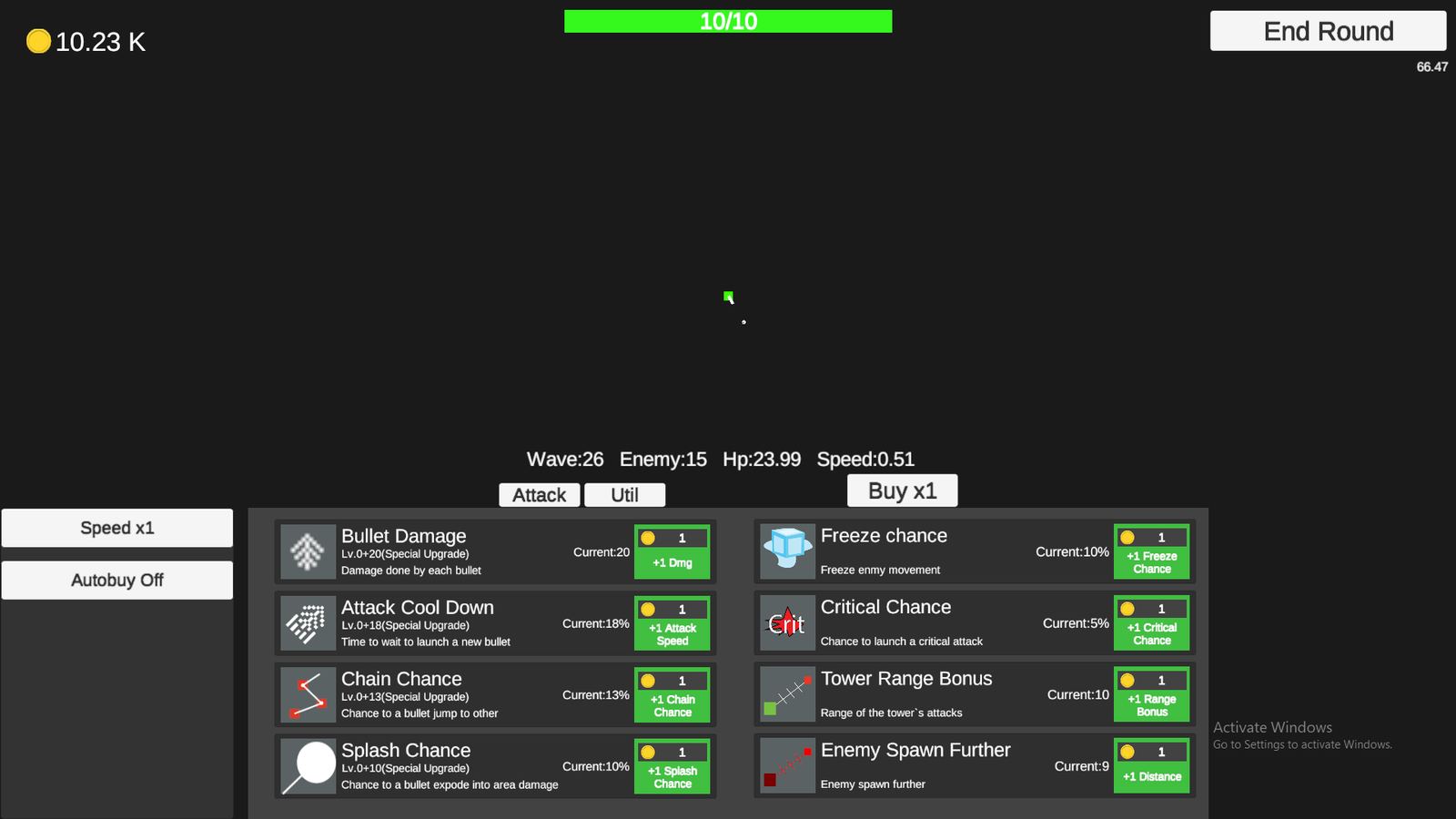
Die on purpose: Alex Faust's turret idle where death is the currency that upgrades death.

Idling to Rule the Gods
GreatTrain under the gods, beat the gods, become the god: Shugasu's long-running pet-raising god idle.
Mine Defense
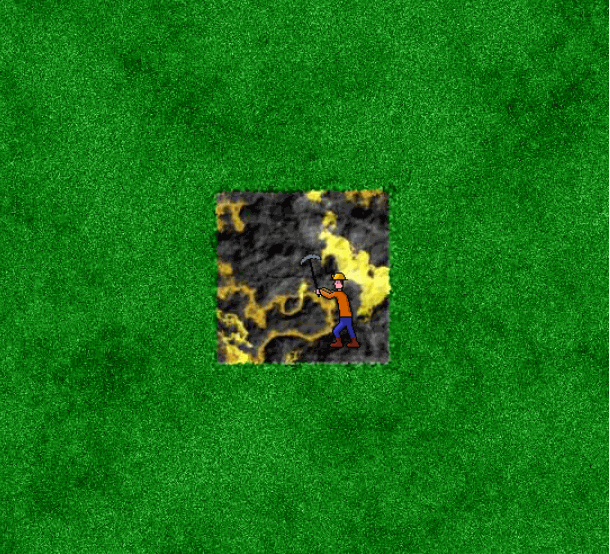
Worth your timeDwarves, gems, and the things that want both: Schaub's long-running canvas defense idle.