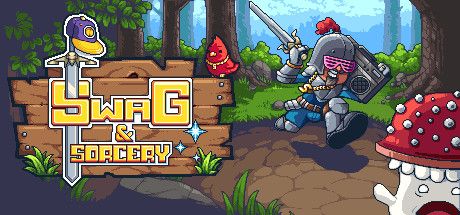
Swag and Sorcery
A streamlined RPG about dressing heroes up and shipping them out for loot
by Lazy Bear Games / Uroboros Games · 9 May, 2019 · Steam (Windows), iOS
The King's great-great-grandfather has lost his magical suit, and the suit is, by every account, extremely stylish. This is the entire premise of Swag and Sorcery: a nation's finest heroes, deployed across forests and swamps, fighting monsters so that a dead dandy's wardrobe can be reassembled.
It comes from Lazy Bear Games and Uroboros Games, the studio behind Graveyard Keeper and Punch Club, and you can feel the same tongue-in-cheek thriftiness. Everything is systems. Everything is a little bit cynical. Somebody is always monetising somebody.
What the loop feels like
You kit out three parties of heroes at your smithy, shuffle their gear until the stat requirements turn green, and march them into the Magical Forest. Combat runs itself. Your job is watching the health bars and deciding, with a merchant's cold heart, when to pull the plug.
A hero drops unconscious in the field, and a chunk of the swag they gathered evaporates on the spot. Retreat a minute earlier and you bank all of it. That's the trade.
The loot comes home, gets refined in town, sold at market or worn, and the proceeds buy hero levels, because experience points are for people with patience. That's the economy.
Then a fashion contest opens, you dress your warrior in something ridiculous for prestige points, and the whole loop begins again with slightly better hats. That's the joke, and it mostly holds.
The systems underneath the joke
The town is the real game. The Smithy, Hunting Lodge, Alchemy Lab and Church each process raw materials into crafting components, and production buildings want to be running constantly, because your income is basically junk-in-gear-out. Gear itself is procedural: rarity tiers, randomised modifier pools, and stat requirements keyed to class, so you craft the same sword four times chasing a better Strength roll.
Progression is gated by boss thresholds per zone, and hero levels are bought with gold rather than earned in combat, which quietly makes the market more important than the battlefield. Community guides converge on the same advice: funnel everything into one core squad, resist the urge to gear an army, and never risk a wipe while your best fighter is carrying rare materials.
Where it grates
Steam reviews sit at a Mixed verdict, and the complaints are consistent. The gear-rolling grind gets thin, the satire repeats, and the mid-game asks you to redo loops you have already mastered. It is a game that is easier to admire as a design than to play for forty hours.
Playing it today
Swag and Sorcery is still on Steam for Windows, and tinyBuild publishes a matching iOS version, so the same suit-hunt fits in a pocket. A Mac build never materialised, which is worth knowing before you buy on a laptop.
If the extraction-with-feelings loop appeals, the closer cousin here is the party-scheduling rhythm of Clicker Heroes, though Swag and Sorcery leans much harder on towns and crafting than any pure clicker.
Verdict: a warm, well-made satire of RPG grinds that runs out of jokes slightly before it runs out of zones. Come for the hipster suit, stay for the retreat button.
If you like Swag and Sorcery
mechanic-matched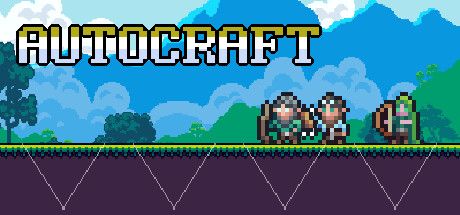
Autocraft
A tiny idle RPG about a champion who loots, sockets gems into a shield, and fights while you do other things.
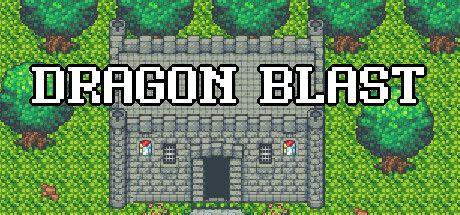
Dragon Blast
A fully automated RPG that warns you three times, in capitals, that it plays itself.
Fidget Spinner RPG
Mine, smith, brew and haggle your way to spinning a toy at ever more absurd RPM. A full crafting-RPG skeleton wearing a 2017 meme as a hat, and Very Positive for it.

Lingyao Garden | 虚空灵药园
Worth your timeA xianxia herb-garden idler where you farm spirit plants, forge weapons and refine pills to save your master.