
Crank
One crank, a wall of darkness, and a tech tree that ends up in space.
by Kev Bourque (FaeDine) · 2015 · Web
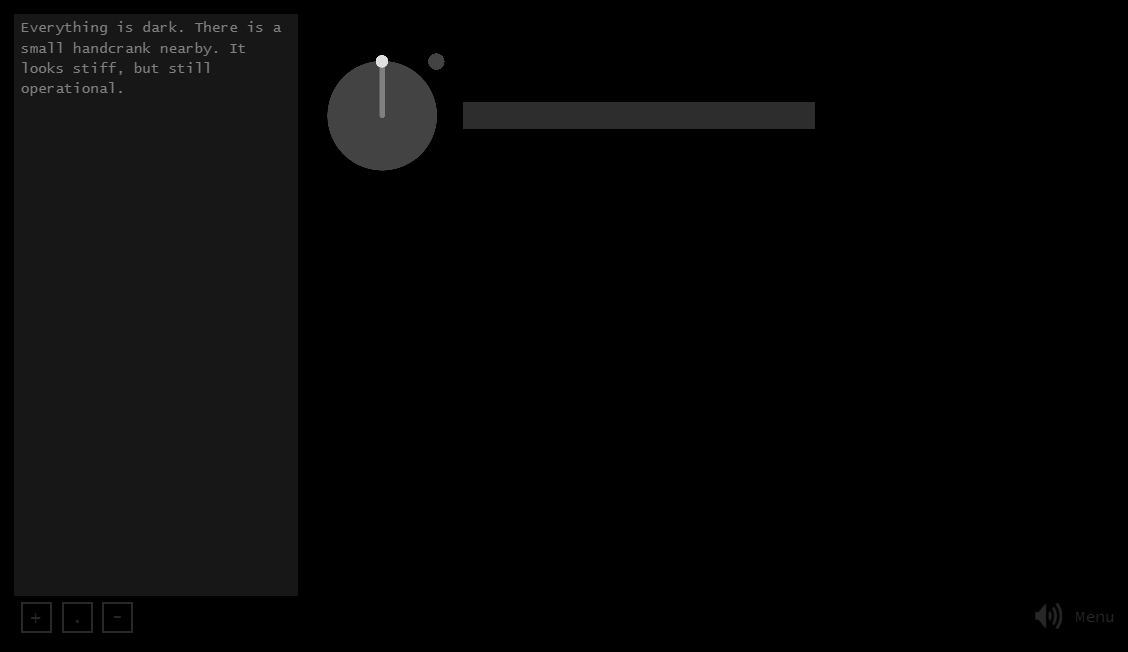
The screen is black except for a crank. Turn it and it makes a little power. That is the whole opening, and it is also the doorstep of one of the deepest games the incremental genre has: ten years of updates, nine unlockable screens, and a tech tree that ends up in space.
What the loop feels like
You crank, and the crank makes Power, and for a while that is the entire world. Then the darkness grows a computer. That's Crank.
The COMP screen takes research slots, you drag concepts like Crank, System and Scrap Metal into them, and the machine studies ideas into existence: Batteries, CrankBots, Duranium, Solar Panels, eventually Antimatter and Q-Comps. CrankBots take over the cranking, factories eat your output, and the taskbar quietly fills with screens while you plan logistics. That's Crank.
The systems doing the work
The named systems are the nine screens: DCPT, POWR, COMP, FABR, SCAN, WPNS, HELM, FACT and DEST, each unlocking a new layer of the game, with orange taskbar entries signalling fresh information. The resource chain runs from Scrap Metal through Batteries and CrankBots to Duranium, Solar Panels, Antimatter and Q-Comps, and the fan wiki maps the whole tree if you want to see the mountain before climbing it. Two design choices give Crank its character: hard inventory caps make storage a genuine strategic constraint rather than a footnote, and the phase transitions, power management, then space travel and planetary colonization, then an endgame boss, have no hard boundary, so the sci-fi arc arrives as a matter-of-fact line in a research list.
Where it stumbles
Crank gives almost nothing away. No tutorial, no signposting beyond the orange taskbar, and a mid-game that can leave you staring at capped storage wondering which upgrade unblocks it; the wiki exists because the game needs one. The presentation is also austere to a fault, a small window of panels rather than a showpiece, and the slow early hours ask for patience that not every player has. None of this is accidental, but it is real friction.
Playing it today
There is only one version, and it is free: the current Godot build at faedine.com, updated for a decade by Kev Bourque under the FaeDine name, with the community wiki as your companion. No Steam page, no phone port, no premium tier, and the browser build has outlived every platform it might have been ported to. If the depth appeals, Anti-Idle: The Game is the other long-haul web classic, and A Dark Room is the genre's study in hiding scale behind one verb.
The verdict
Crank is the genre's best argument that one honest verb can carry a decade of updates: a hand crank in the dark that becomes cosmic industry, all inside a window smaller than most game menus. It asks for patience and pays it back with one of the most satisfying compression arcs in incremental games. Start cranking. The darkness has a tech tree in it.
Gameplay videos
Community
If you like Crank
mechanic-matched
Universal Paperclips
GreatA polite little AI makes paperclips. Then it makes a different kind of everything.
Level 13
Worth your timeThe 13th level of a layered city: a text sci-fi settlement builder from the Evolve developer.
A Dark Room
★ EssentialA fire stokes. A stranger stumbles in. The village grows. You know what you did in the forest.
1255: Rise of Teutonics
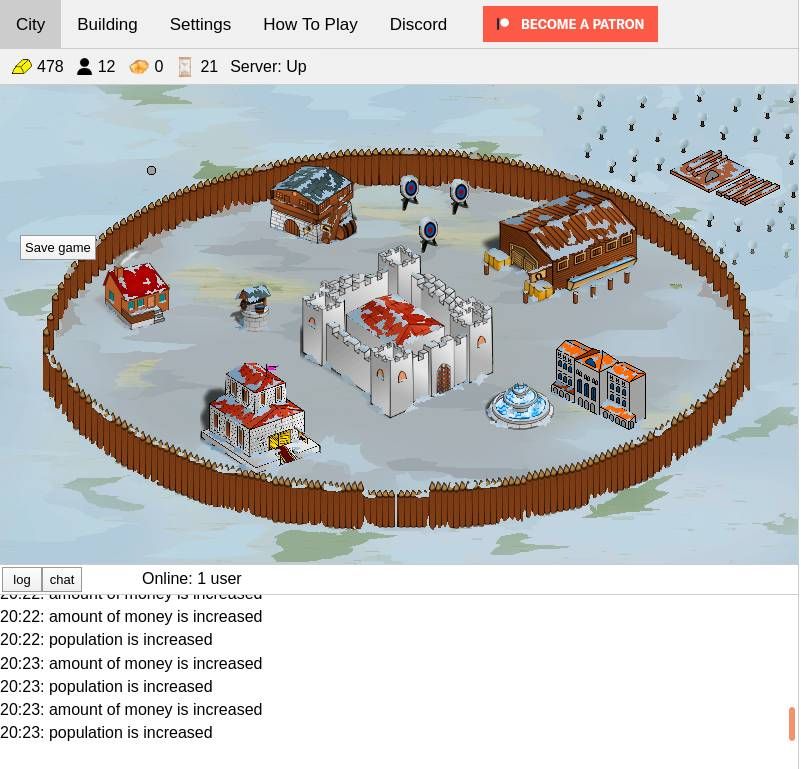
Worth your timeAn open-source medieval burgomaster sim where taxes, gallows and heroes share one 30-second tick.