
That Rocket Game
Launch a rocket, sweep the sky's junk, grind it into a higher ceiling.
by Dan's Games · 11 Apr, 2023 · Windows
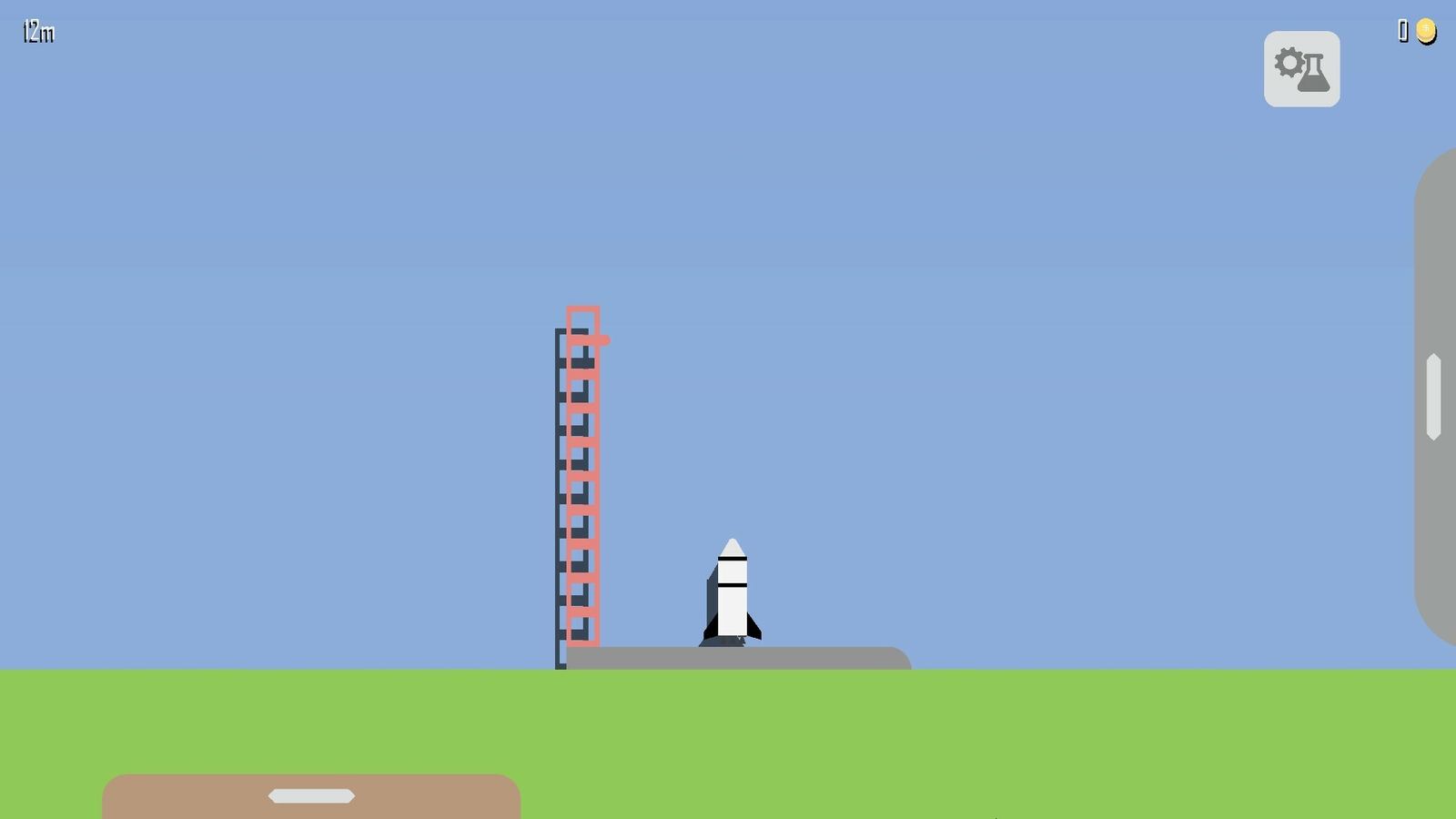
Dan's Games released That Rocket Game in April 2023, and the title is doing honest work: it is a game, it has a rocket, and there is not much else to the name. You build a rocket, launch it through a sky littered with junk, sweep up the debris, grind it into credits on the ground, and buy your way to a higher ceiling. It is a flash-era launch-and-upgrade loop wearing a space-cleanup costume, sold for pocket change on Steam.
What the loop feels like
Launch, steer, hoover up junk at altitude, dodge the asteroid field, land, grind. Higher altitude means rarer debris, which means the altimeter is the scoreboard, and every run is a negotiation between how high you dare push and whether the booster timing will get you home with the haul intact. That's That Rocket Game.
Back on the ground the second job starts. The junk gets sorted and fed into grinders, the grinders pay out credits, the credits flow into engine power, structural integrity and booster capacity, and the occasional rare collectible earns a permanent spot on the display shelf. A game about cleaning the sky, funded by a trophy cabinet. That's That Rocket Game.
How it actually works
The economy is flight-sorted. Debris value scales with altitude, and grinding capacity back home is part of the balance: players who tunnel-vision on height hit income bottlenecks when their grinders cannot process the haul, so the real optimisation is pairing ceiling with throughput. Rocket upgrades split across launcher efficiency, engine power, structural integrity and boosters, each buying a different slice of next run's performance. Intermittent high-risk, high-reward challenges test your flying for bonus cash, and they do not immediately retry on failure, so veterans treat them as events to attempt only when the rocket reliably matches the ask. The collection layer rounds it out: rare artifacts from exploration runs get housed on a dedicated shelf, a small completionist loop that gives the hangar some personality.
Where it stumbles
The complaints are predictable because the design invites them. Sorting items for money between runs and waiting through slow descent phases drags the pacing, and players note the novelty exhausts quickly once the upgrade ladder is visible end to end. There is no sprawling content or active roadmap here; it is bare-bones by micro-budget standards, with presentation closer to a browser game than a modern desktop title. And the comparisons write themselves: it follows the Learn to Fly formula almost beat for beat, and its cheeky Kerbal Space Program nod, usually earned when your rocket explodes catastrophically, shares none of that game's physics depth. Community sentiment is affectionate but realistic about the hour or two on offer.
Playing it today
Cheap on Steam, Windows only, with no mobile version verified under the same developer. It sits naturally next to Human Powered Spacecraft on the weird-launch shelf and SPACEPLAN on the rocket-with-a-punchline one. For deeper systems under the same sky, To The Core is the dig.
The verdict
A small, cheerful launch-and-loot loop that knows exactly how big it is. For a coffee-break rocket with a shelf of souvenirs, this is the one.
If you like That Rocket Game
mechanic-matched
Chonkers
A cat-flipping idle economy in a cozy trench coat: adopt, chonkify, sell by the kilo.

Fungiculture
A fairy, a fruiting chamber and 154 fungi: a cozy mushroom-growing idler for the second monitor.

Gaiadon: Eternal Quest
A numbers-heavy idle RPG with three stacked prestige layers, 150+ pets and gear synergy puzzles, built to be tuned over months, not days.

Kitten Food Alley
Run food stalls staffed by cats, where petting your employees is the production line.