
The Duck Pond
The Duck Pond is a condensed and relaxing idle game, focused on creating a short handcrafted experie...
by Quack People · 2024-07-26 · Steam
The Duck Pond opens with a promise most idles never make: it ends. Quack People's July 2024 Steam release bills itself as a condensed and relaxing idle game, focused on creating a short handcrafted experience with an ending. Throw food to attract different types of duck, read about them in the duckopedia, and maybe you will discover the epic giga duck. The developer says outright that they prefer a game you can actually finish, and the whole design keeps that promise.
What the loop feels like
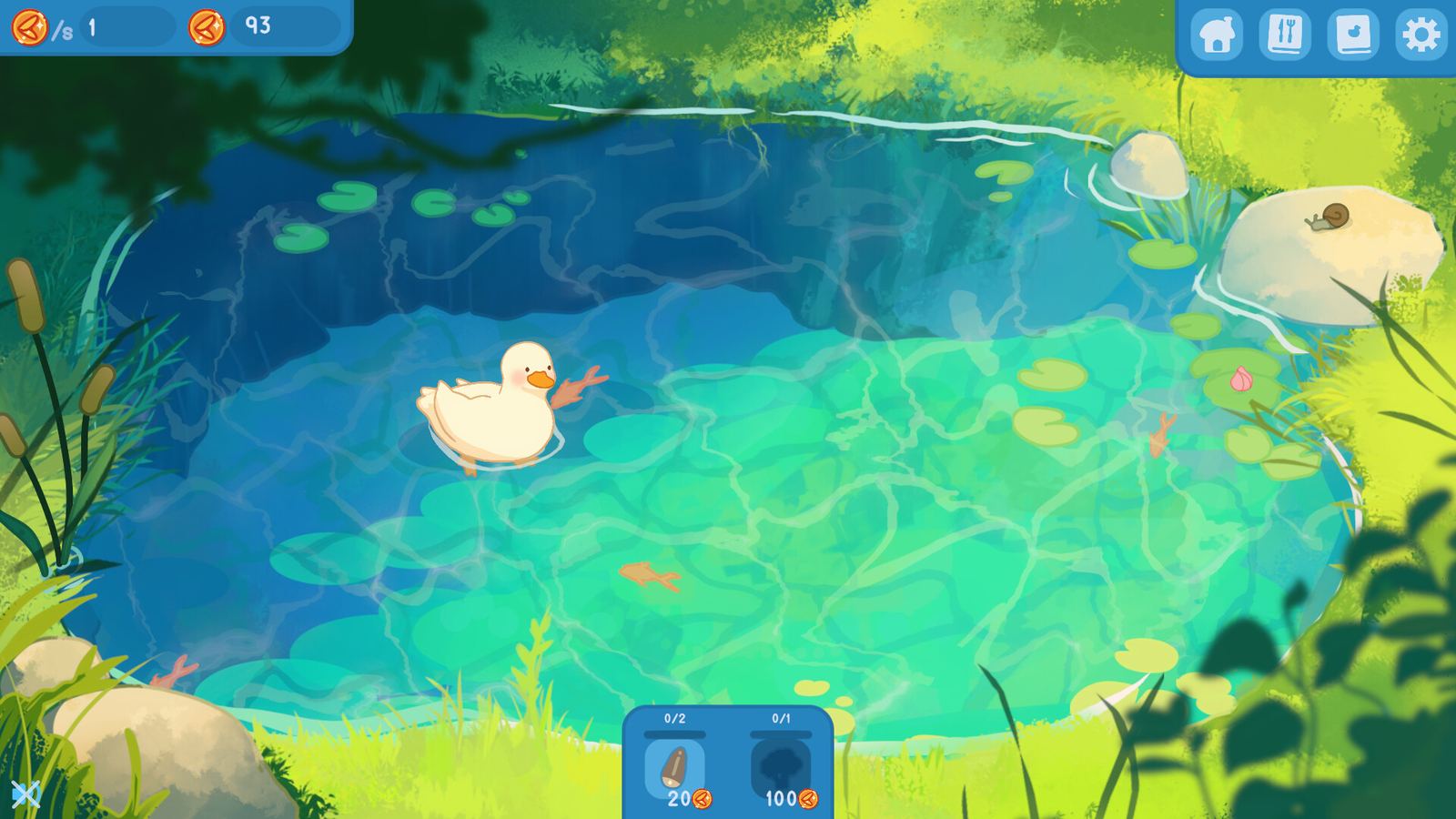
You start with simple food and simple ducks. Throwing it into the water attracts production, quacks per second from the basic birds, and every new species you coax out of the pond adds its own bonus to the economy. The hand-drawn art does quiet work in the background, and when the pond gets overcrowded the ducks move into a small hut rather than complaining. That's The Duck Pond.
Then the food gets fancier. Gourmet options seed higher-tier spawns, support ducks buff the bread-lovers, and the duckopedia fills in as an encyclopedia of everything the pond has produced. Somewhere past the corporate garbage you clear out of the water, the epic giga duck waits at the end of the log. That's The Duck Pond.
How it actually works
Four named systems carry it. The food and attraction loop is the engine: throw various types of food to attract a lineup that runs from simple ducks through bread ducks to gourmet, chef and epic giga tiers. Quack and resource generation is the economy: simple ducks yield basic production while specialized ducks introduce modifiers, passive seed and food generation, and buffs to overall output. The duckopedia is the logbook: a built-in encyclopedia that tracks discovered species and rewards curiosity about food combinations. Management and space is the constraint: overcrowding sends ducks to huts, layout affects production loops, and synergies between support ducks and basic ones matter more than raw clicking. The arc is deliberately linear and handcrafted, and one hidden achievement is notorious enough that the community still trades tips on it.
Where it stumbles
The honest case against is size. Most players finish the game completely within an afternoon, and some feel that makes it thin at the price point. The late milestones, the gourmet caviar stage among them, grind noticeably more slowly than the charming early pacing suggests. And a few features lack clear in-game explanation, with the exact utility of the duck hut the recurring question. None of it breaks a game this small, but this is a palette cleanser rather than a lifestyle: players wanting deep math, prestige layers or automation engineering should adjust expectations before buying.
Playing it today
On Steam for Windows, Mac and Linux at a modest price, with no mobile release under the name. For other idles that respect an ending, Ten Seconds Trillion and Minutescape are the catalog's other completibles; for the endless kind this one deliberately rejects, Cookie Clicker remains the standard.
The verdict
A cozy, hand-drawn idle with a definitive ending and ducks that move into huts when the pond gets crowded. Exactly as big as it says it is, which in this genre is the rarest feature of all.
If you like The Duck Pond
mechanic-matched
AdVenture Communist
Worth your timeThe idle game with missions instead of mindless clicking: potatoes in, Supreme Einsteins out.

Astrodle
Shoot blobs in orbit around a Zodiac star, harvest their essences, build a drone fleet, and become an immortal space god in a weekend. A finished incremental, not an infinite one.
Berry Picker
Pick berries off an infinitely upgradeable bush, hire garden gnomes, and fire the harvest out of a cannon.
BubbleByte
Worth your timeA game about cats and bubbles, from Vittorio Romeo of the Desolate series.